

Storage and shelf life
Good foil storage is simple, but it matters. Heat, humidity and poor handling can change how metallic, pigment and specialty foils run on press.
Keep rolls clean and upright
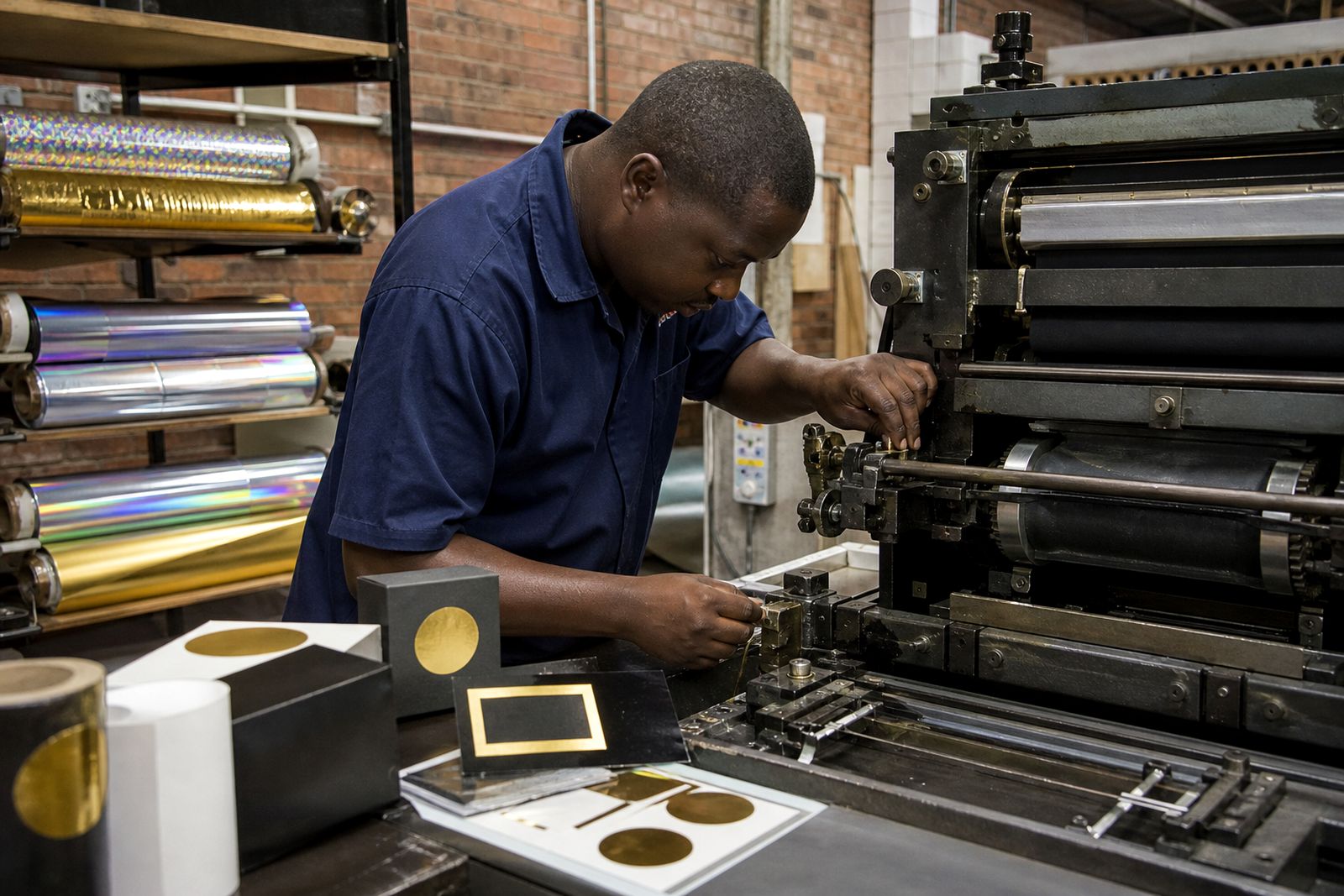
Store foil rolls in a cool, dry place and keep them upright on their cores. Upright storage helps prevent dents, oval rolls and crushed edges that can show up as tracking problems on press.
Leave rolls in their protective packaging until you need them, especially if the job is for cartons, labels, book covers or leather goods. If a roll has been moved from a cold room into a warmer shop, let it settle before opening it so condensation does not sit on the surface.
- Keep rolls away from direct sun, heaters and hot delivery vehicles
- Do not stack heavy items on top of foil cartons
- Label opened rolls clearly so the right finish is used first
Watch heat and humidity
Foil does not like damp air or long exposure to heat. High humidity can affect release and adhesion, while excess heat can change the way the layer behaves on coated board, soft-touch laminate and other difficult surfaces.
If storage conditions are poor, test a short run before committing to a full job. That is especially important for metallic foils, pigment foils and holographic or diffraction foils, where finish and transfer can change from one press room to another. For starting guidance on heat settings, see Temperature windows explained.
If the shop is struggling with release, check the whole process, not only the foil. Make-ready, dwell time, pressure and die condition all work together.
Give opened stock time
Once a roll is opened, handle it as working stock, not spare stock. Reseal what you are not using and keep the exposed roll wrapped between runs.
If foil has been in a hot bakkie or a warehouse with poor airflow, give it time to return to normal shop conditions before cutting, mounting or printing. Sudden temperature shifts can create condensation or make the carrier behave unpredictably.
For jobs that need narrow widths, ask for foil slit to roll width so you reduce waste and handling on press. If you need help choosing the right width for a specific press, the contact form is the best place to ask for advice.
Match storage to the job
Different substrates can need different care. Foil for leather, plastics, textiles and soft-touch laminate should be stored with the same attention as standard decorative foil, but the press behaviour can be more sensitive, so a clean, stable roll is worth protecting.
For security work, keep specialty foils separate from general stock so they are not mixed up. For production planning, it helps to review the right release profile before the job starts. See Choosing release profiles and Foil on soft-touch for more detail.
| Check | Why it matters |
|---|---|
| Upright storage | Helps protect roll shape and edge quality |
| Dry conditions | Supports consistent release and transfer |
| Room temperature acclimatisation | Reduces condensation after transport |
| Clear roll labelling | Prevents wrong foil being loaded on press |
Do a press room check
Before a long run, check the die, the foil route and the make-ready. A good foil job depends on the right temperature window, dwell, pressure and release profile, whether the press is platen, cylinder or roll-to-roll.
If a stored roll looks dull, marks easily or releases unevenly, test it on a short sample before going live. That is the safest way to confirm the condition of the roll and the surface you are printing onto. For related practical notes, read Die prep checklist and Temperature windows explained.
For samples, swatch books or help matching a finish to the substrate, speak to Stampingfoil or send an enquiry through the contact form.
What our Hot Stamping Foil customers say
Verified Google reviews
Also worth a look
Ask about a foil for your job
Send a note through our contact form with the substrate, the press you run (platen, cylinder or roll-to-roll), the finish you are after and the run length, and we will come back with a foil grade, a sample and a quote.
Open the contact form