

Sustainability notes
Hot stamping can be cleaner when the setup is right. These notes focus on carrier waste, make-ready and what converters can control on press.
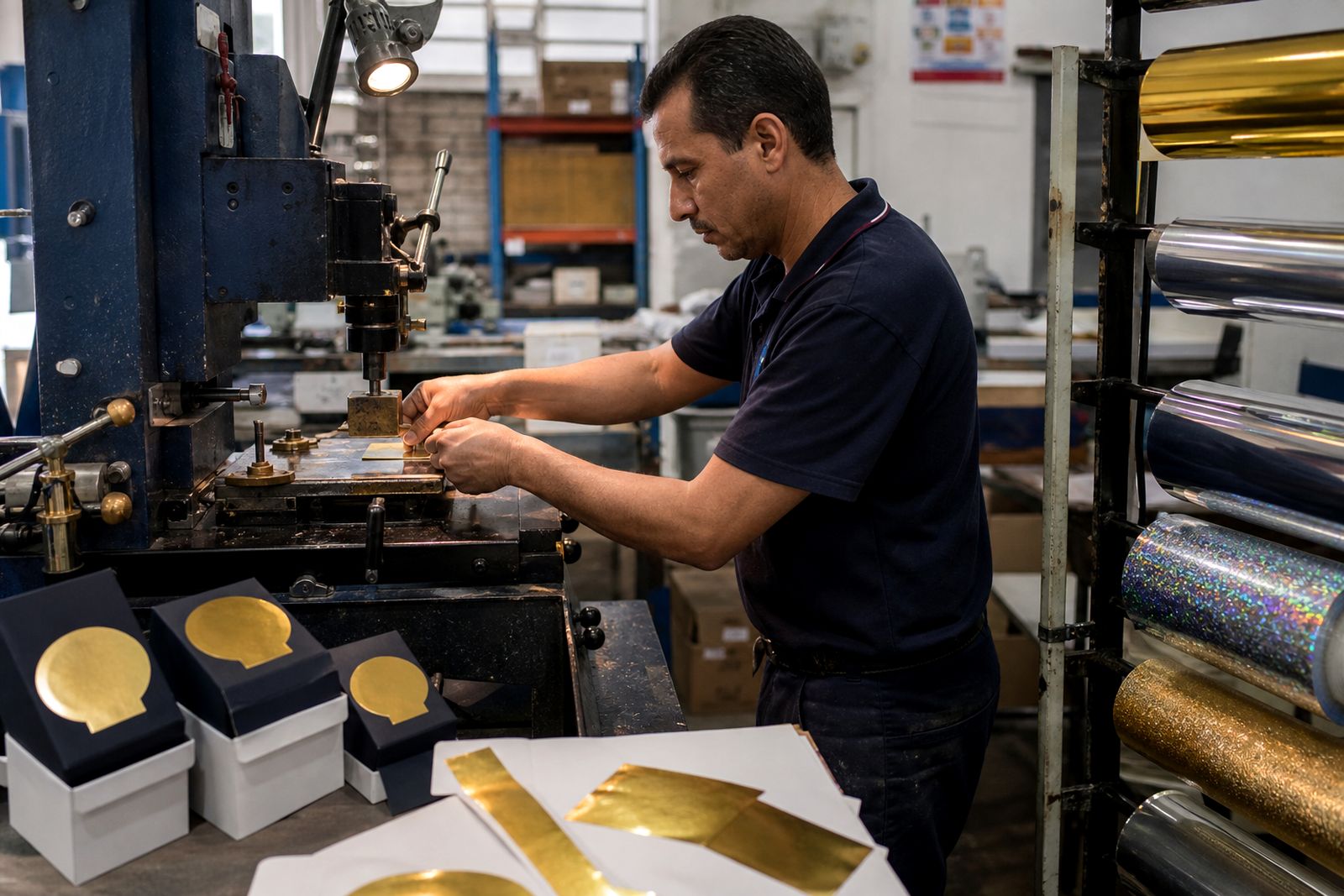
Where waste usually comes from
Most foil waste starts before the first good impression. Oversized web width, poor die alignment and repeated setup pulls all add carrier film and scrap to the job.
On coated board, soft-touch laminate, labels and cartons, the first checks are simple: confirm the foil width is suited to the image, keep the die face clean, and make sure the press is feeding square. If the web is too wide, ask for foil slit to the roll width you actually need. That reduces offcut handling and keeps stock closer to the job size.
For job planning, it helps to match the finish to the real requirement. A metallic gold or silver, a pigment black or white, or a holographic panel each behaves differently. Picking the right type first can cut trial runs and limit rejected sheets.
What the press operator can control
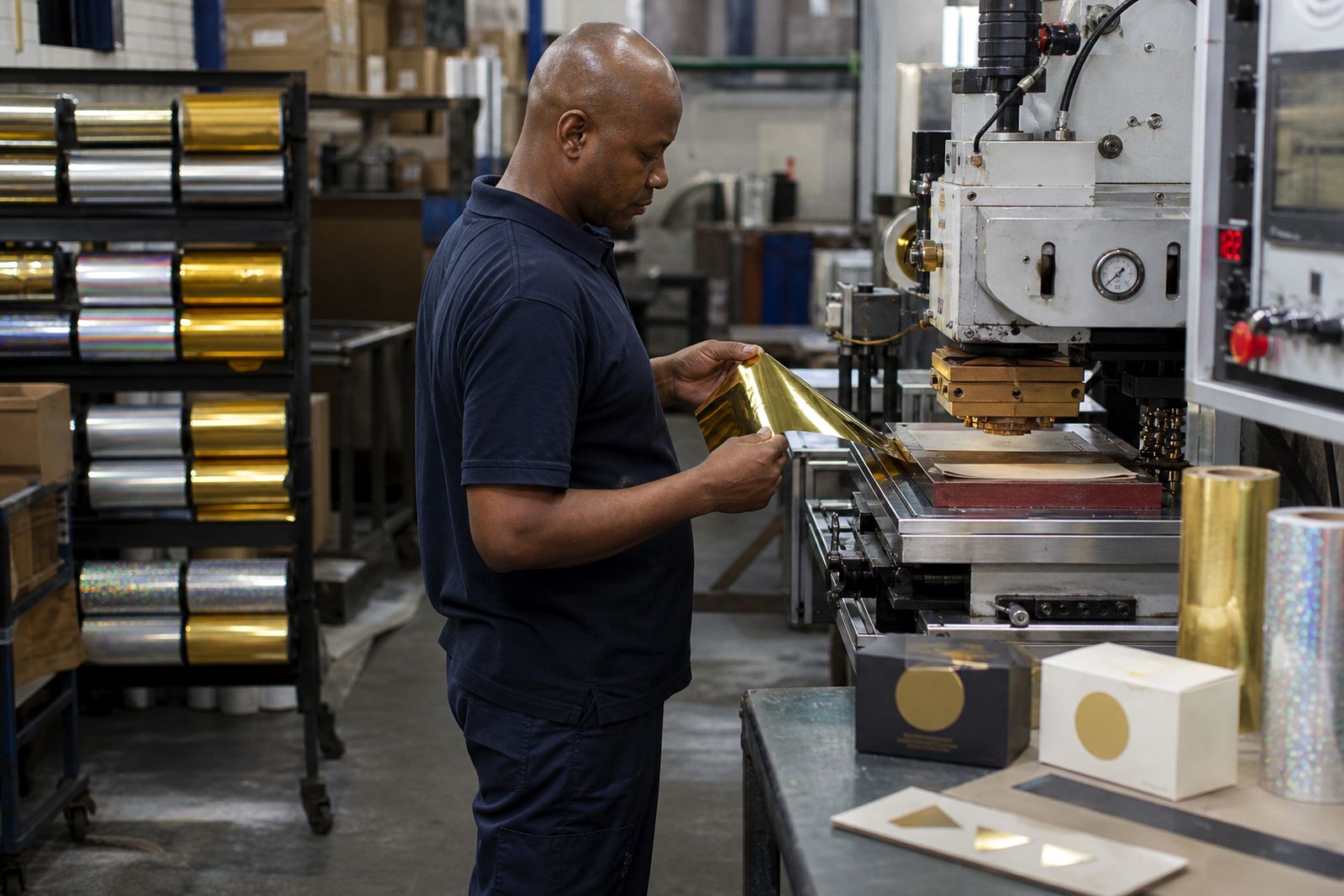
Good foil transfer depends on temperature, dwell, pressure and release profile. Those settings are not fixed rules. They are starting points that must be tested on the actual substrate, die and press.
As a practical guide, many jobs begin with moderate heat and careful step-up testing rather than chasing the highest setting. Too much heat or pressure can increase foil pull, blur edges and leave more waste on the carrier. Too little can cause incomplete release and extra passes.
For platen, cylinder and roll-to-roll presses, keep notes on what worked for each material. A clear record of make-ready, impression order and foil type saves setup time and reduces repeat spoilage on the next run.
Choose the right foil type
Not every finish is suitable for every application. Metallic foils, pigment foils, holographic and diffraction foils, security foils and specialty foils all have different release behaviour and visual goals.
For leather goods, plastics and textiles, the substrate surface matters as much as the foil. Soft-touch laminate often needs careful testing because the surface can behave very differently from standard coated board. If the finish is there mainly for brand effect, keep the image area realistic and avoid unnecessary solid coverage.
| Material | What to watch |
|---|---|
| Coated board | Release, fill and edge sharpness |
| Soft-touch laminate | Adhesion and pressure balance |
| Leather | Heat sensitivity and grain detail |
| Plastics and textiles | Surface energy and transfer consistency |
Make-ready and die prep
Cleaner make-ready means less scrap. Before the run, check the die face, backing build-up, image depth and alignment. Magnesium, copper and brass dies each bring different thermal behaviour, so the setup should be tested rather than assumed.
If the foil image is patchy, do not keep increasing pressure without checking the cause. The issue may be die detail, release profile or substrate prep. A short press-side test with a swatch book or sample can confirm whether the foil is suitable before full production starts.
For wider runs, keep the first metres for setting and save the approval area separately. That small habit reduces waste from the main reel or sheet stack and gives a more reliable record for repeat work.
Keep stock and advice close
Careful storage and practical support also affect waste. Foil that is stored neatly, handled cleanly and kept to the correct width is easier to run and less likely to be damaged before use. When a job is unusual, ask for samples and press-side advice before committing to the full run.
For help with foil selection, temperature windows, release profiles or slit widths, use the contact form. You can also browse related notes on release profiles, temperature windows and storage and shelf life.
If you need a wider view of finishes and applications, start at the Journal section or explore products and applications.
What our Hot Stamping Foil customers say
Verified Google reviews
Also worth a look
Ask about a foil for your job
Send a note through our contact form with the substrate, the press you run (platen, cylinder or roll-to-roll), the finish you are after and the run length, and we will come back with a foil grade, a sample and a quote.
Open the contact form