

Colour matching guide
Use this guide to compare foil shades, check release on press and confirm the look before production. It is built for metallic, pigment, holographic and specialty foils.
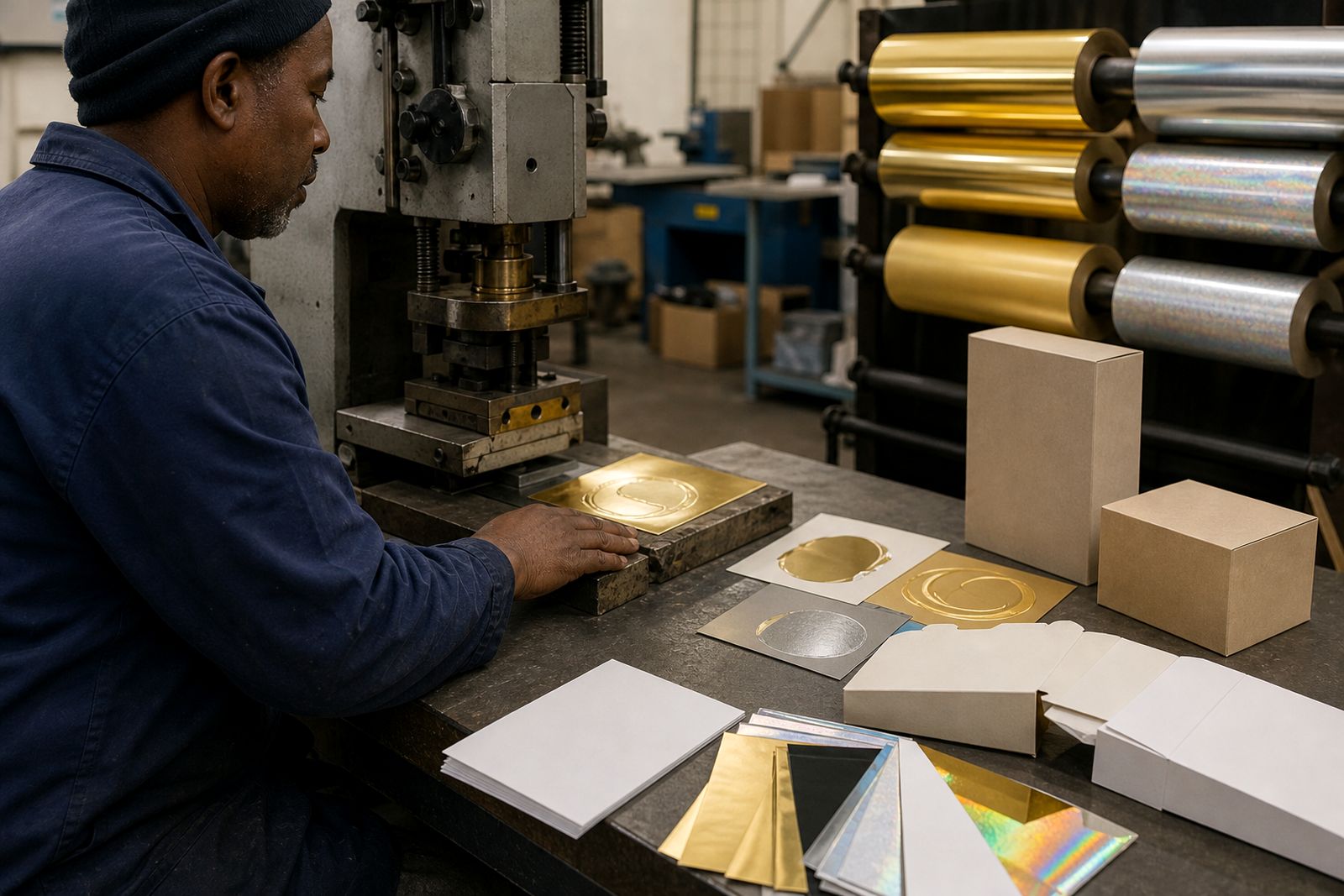
Start with the target
Begin by deciding what you are matching against. It may be a printed sample, an approved carton, a label proof, a leather swatch or a finished part with soft-touch laminate. Keep the target clean and note the substrate, coating and print method, because the same foil can read differently on coated board, plastics, textiles and leather.
If you are comparing a metallic shade, look at the finish in the same light you will use for approval. Gold, silver, copper, bronze, mirror and satin foils can change appearance with angle, pressure and surface texture. For precise checks, keep the comparison on the same substrate family where possible.
Useful starting points and related references:
Build a press trial plan
Set up one trial that isolates only the variables you need to check. Change one item at a time, such as temperature, dwell or pressure, so you can see what affects colour, coverage and release. Keep notes on the press type, die material and sheet or web speed.
A practical starting range is usually tested in the pressroom rather than set by guesswork. For many foils, printers begin around common hot stamping test ranges and then adjust for the substrate, press style and die. The aim is to find the narrow window where the foil transfers cleanly without dulling the finish or overprinting the image.
When preparing the trial, make sure the die is clean and the make-ready is correct. Magnesium, copper and brass dies can behave differently, so keep the tool and press setup consistent while you compare shades.
Check the foil behaviour
Once the first pull is made, inspect the image under steady light. Look for even transfer, sharp edges, no pinholes, no patchiness and no tone shift across the solid area. If the foil looks too dark, too bright or slightly dirty, the cause is often the combination of temperature, dwell, pressure or substrate texture rather than the colour itself.
For pigment foils, check coverage and opacity. For holographic and diffraction foils, check the pattern clarity and whether the effect sits correctly on the image area. For security foils, confirm that the intended features remain legible after stamping.
Quick checks before approval
- Compare the pull against the approved target under the same light
- Check solid areas, fine detail and edges separately
- Confirm the foil release is clean across the whole image
- Record the final press settings for repeat work
Match for the substrate
Different materials need different handling. Coated board may accept a foil well at one setting, while soft-touch laminate may need a different release profile. Plastics, textiles and leather also react differently to heat and pressure, so the same foil can need separate testing even when the artwork stays the same.
On labels and cartons, watch for blocking, scuffing and any movement in the image after finishing. On leather goods, test a small area first and confirm the surface can take the heat without marking. For rolls slit to width, keep the edge condition consistent so the web feeds evenly and the image stays stable.
| Check | Why it matters |
|---|---|
| Surface type | Affects adhesion and final appearance |
| Press format | Platen, cylinder and roll-to-roll presses need different setup |
| Die type | Influences heat transfer and image sharpness |
| Release profile | Helps the foil release cleanly at the right moment |
Confirm and repeat
Once the colour is accepted, write down the full setup so it can be repeated on the next run. Include the foil type, substrate, die, press format, temperature window, dwell, pressure and any notes on make-ready. Keep a sample pull with the job record for future comparison.
If the match needs revisiting later, start by comparing the old sample with a fresh swatch rather than changing the whole setup at once. Swatch books and press-side advice make it easier to narrow the issue quickly, especially when a job moves between print lines or materials.
If you need a new starting point or want to ask about a particular foil family, use the contact form and request guidance for your substrate and press setup. You can also review related support pages such as Press settings sheet, QA checklist and troubleshooting index.
What our Hot Stamping Foil customers say
Verified Google reviews
Also worth a look
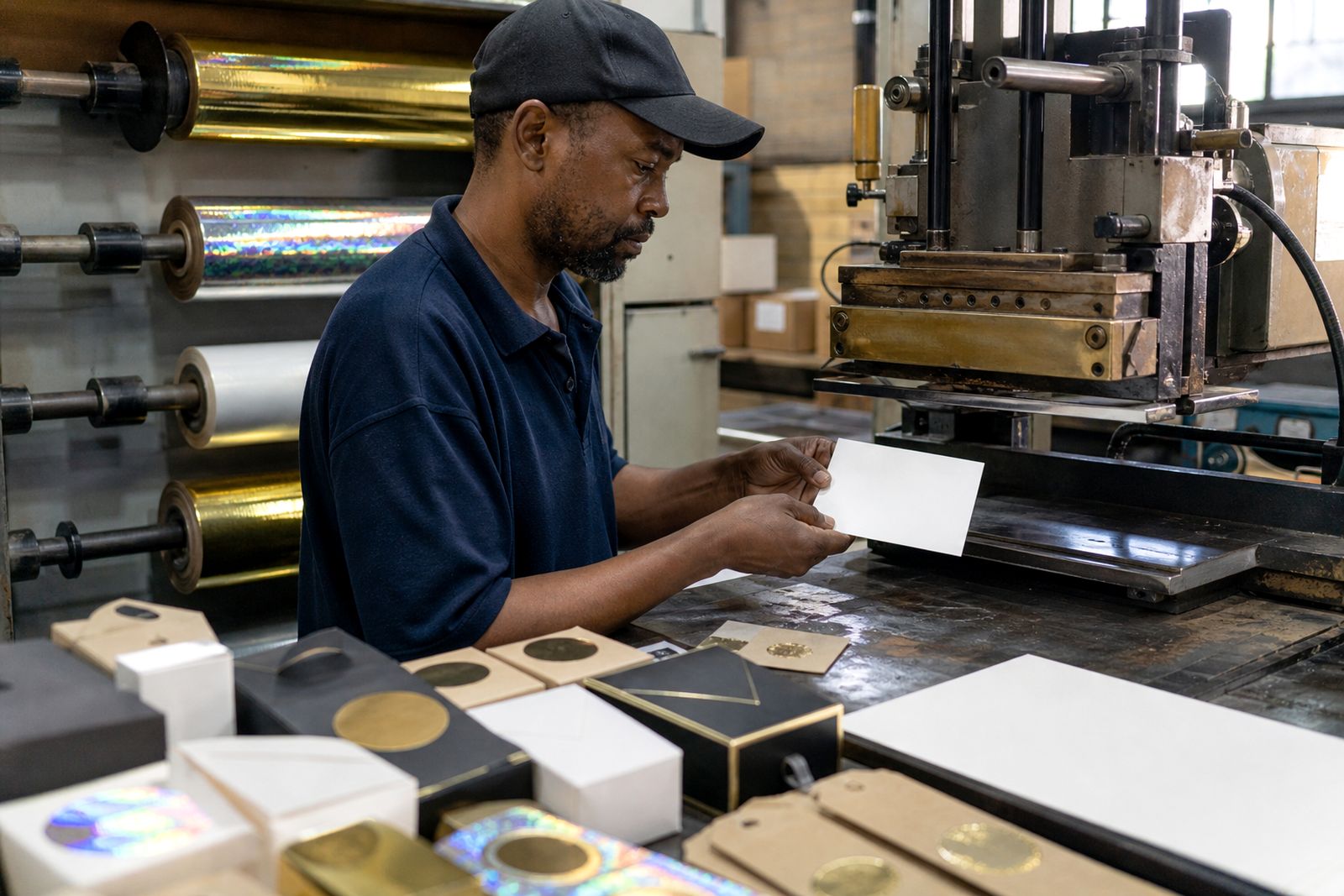
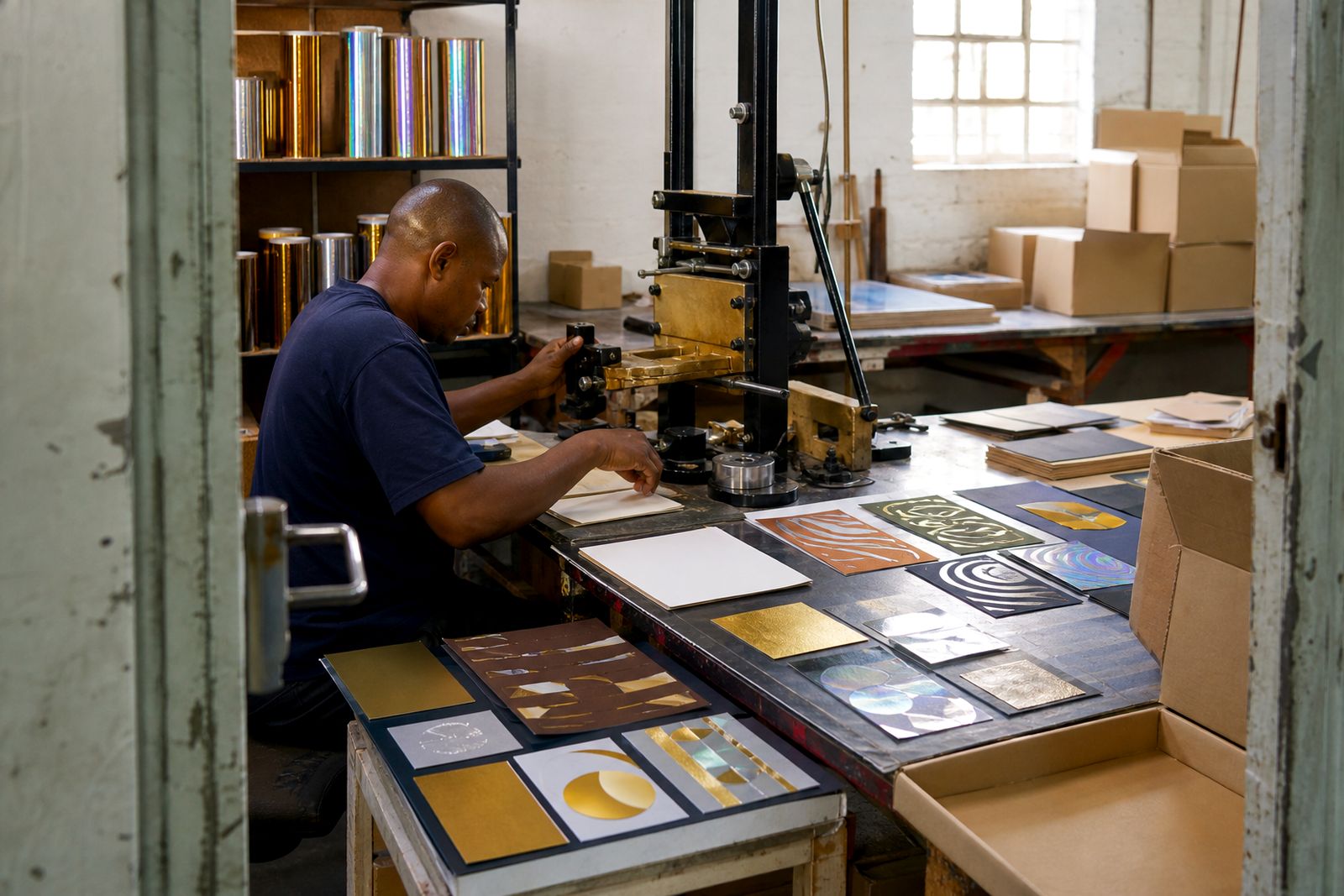
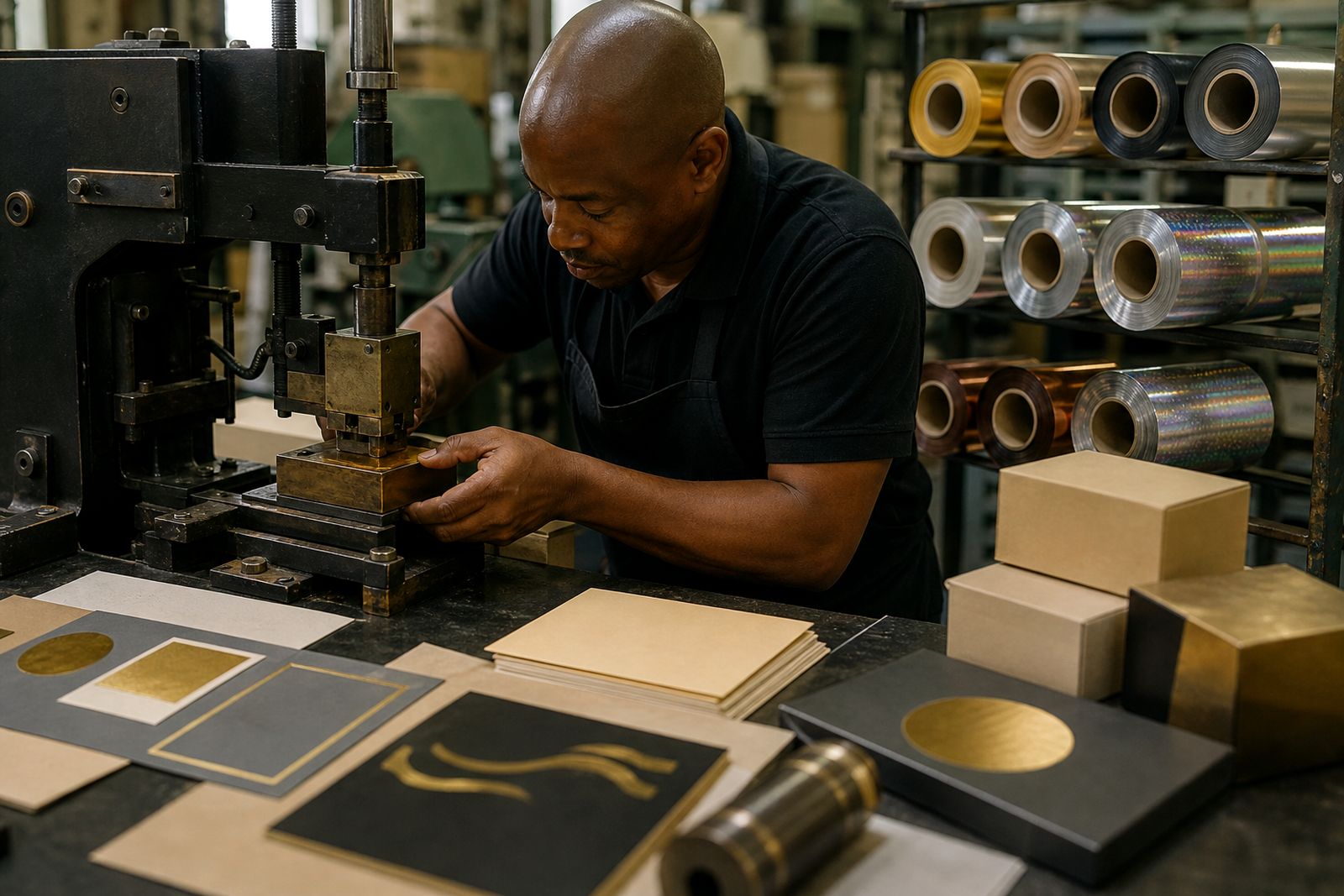
Ask about a foil for your job
Send a note through our contact form with the substrate, the press you run (platen, cylinder or roll-to-roll), the finish you are after and the run length, and we will come back with a foil grade, a sample and a quote.
Open the contact form