

Sample book index
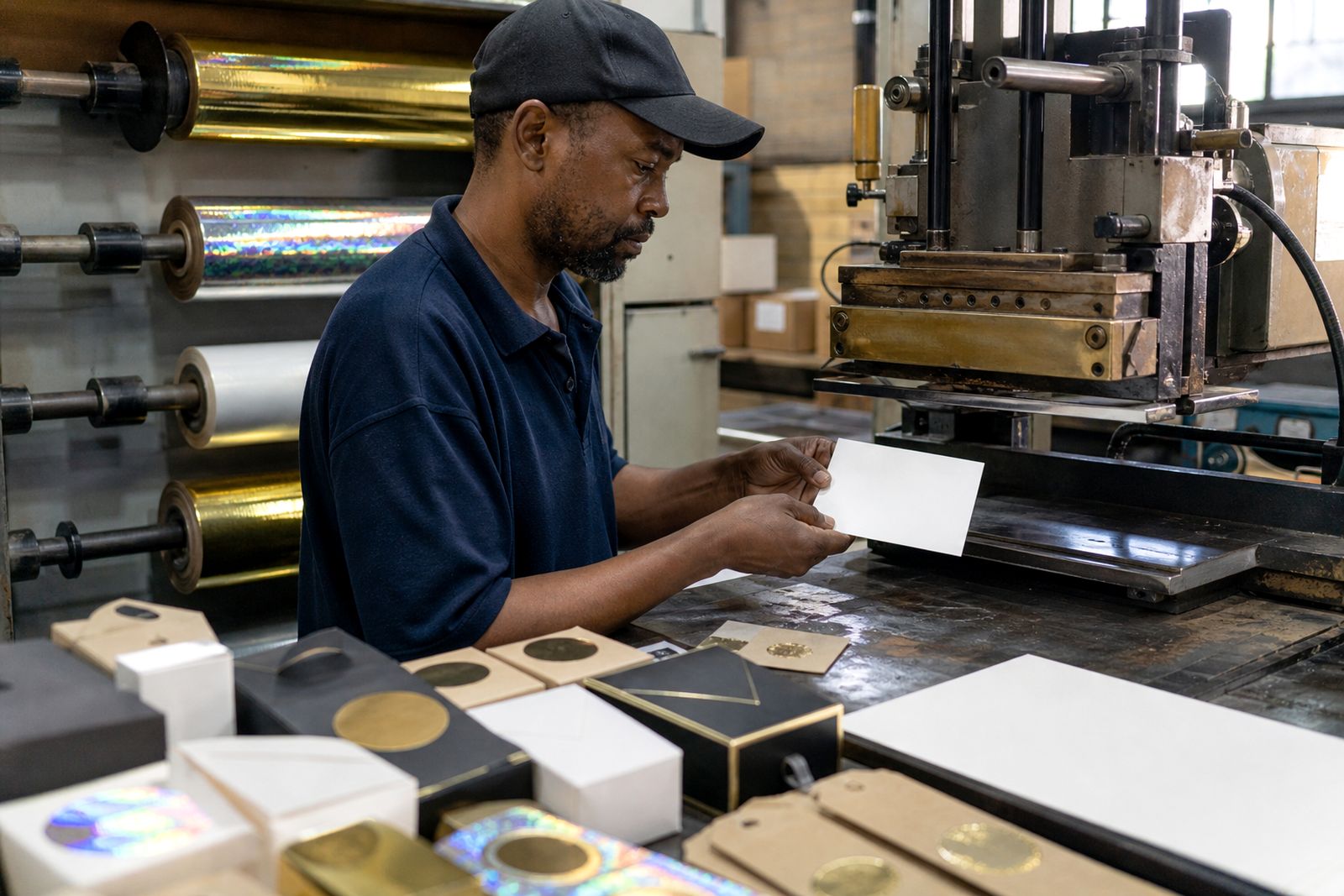
Use the sample books to narrow foil choices quickly. They group colours, finishes and specialty ranges for press-side comparison and make-ready.

How the index is organised
The sample books are arranged to help a trade counter or press team move from broad choice to final selection without guessing. Start with the finish family, then narrow by substrate, press type and the look required on the finished piece.
For general selection, compare metallic, pigment, holographic, diffraction, security and specialty ranges against the job spec. If you need a wider starting point before opening a swatch book, use the foil selection guide.
Keep the substrate in mind at the start. Foil that looks right on coated board may behave differently on soft-touch laminate, labels, cartons, book covers, leather, plastics or textiles. The index is meant to save time before press trials, not replace them.
What to check first
Before you mark a sample as suitable, check the basic job details against the swatch entry and the intended press setup.
- Substrate type and coating, including soft-touch laminate if used
- Press format, whether platen, cylinder or roll-to-roll
- Required colour family, finish and visual effect
- Die type and detail level, especially on fine type or security artwork
- Need for adhesion testing and a make-ready trial
If the job has unusual detail or a difficult surface, pair the sample book with the substrate compatibility chart and the die making notes before moving to press.
Reading a swatch entry
Each swatch is there to help you compare appearance and practical handling, not only colour. Look at reflectivity, opacity, edge sharpness and how the finish sits on the surface under normal light.
| What to note | Why it matters |
|---|---|
| Colour family | Helps match metallic, pigment or special-effect requirements quickly |
| Surface effect | Shows whether the foil reads mirror, satin, holographic or diffraction |
| Substrate notes | Flags where a different substrate may need a separate test |
| Press notes | Supports setup on platen, cylinder or roll-to-roll equipment |
When a swatch is close but not exact, use it as the starting point for a test strip and compare it with the finished sample under the same lighting used for approval.
From sample to press
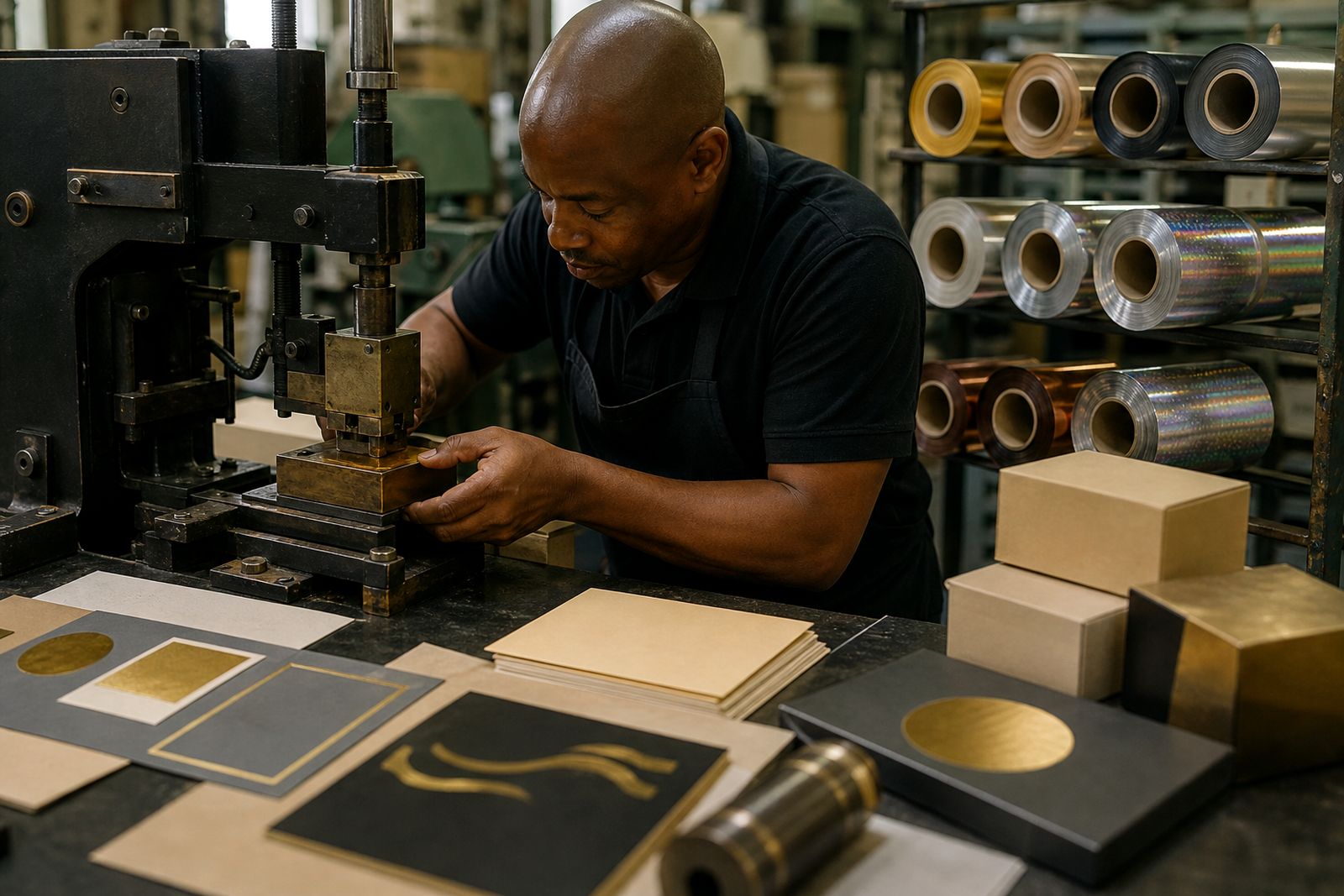
A sample book is most useful when it is linked to a clear press plan. Set a starting temperature window, dwell and pressure for a small test area, then adjust one variable at a time. The aim is to confirm release, image sharpness and coverage before longer runs.
For press-side checks, keep the press settings sheet close to the job file. It helps record the settings you tested, the die used and the result on the chosen substrate. If the foil is being used on coated board, labels or leather goods, confirm edge detail and fill across the full image area.
Where the first pull is not right, inspect make-ready, foil route, pressure balance and die condition before changing the foil choice. The troubleshooting index is useful when you need a quick way to work through common faults.
Keeping samples in order
Swatch books stay useful when they are kept clean, stored flat and returned to the same order after use. Mark any page that has been tested on a specific substrate so the next person knows what was checked and what still needs attention.
Store foil rolls and sample material away from dust, heat and direct sunlight. If a sample page is damaged, replace it before the book goes back into circulation. For broader care guidance, see Care and Storage and Shipping rolls for handling advice when stock moves between teams or locations.
If you need a fresh sample, a matching swatch or help narrowing a range, use the contact form. Stampingfoil can also help with colour matching, security options and the right slit width for the job.
What our Hot Stamping Foil customers say
Verified Google reviews
Also worth a look


Ask about a foil for your job
Send a note through our contact form with the substrate, the press you run (platen, cylinder or roll-to-roll), the finish you are after and the run length, and we will come back with a foil grade, a sample and a quote.
Open the contact form