

Finishing glossary
Understand hot stamping terms like release, dwell, make-ready and dies with plain explanations for finishing checks.
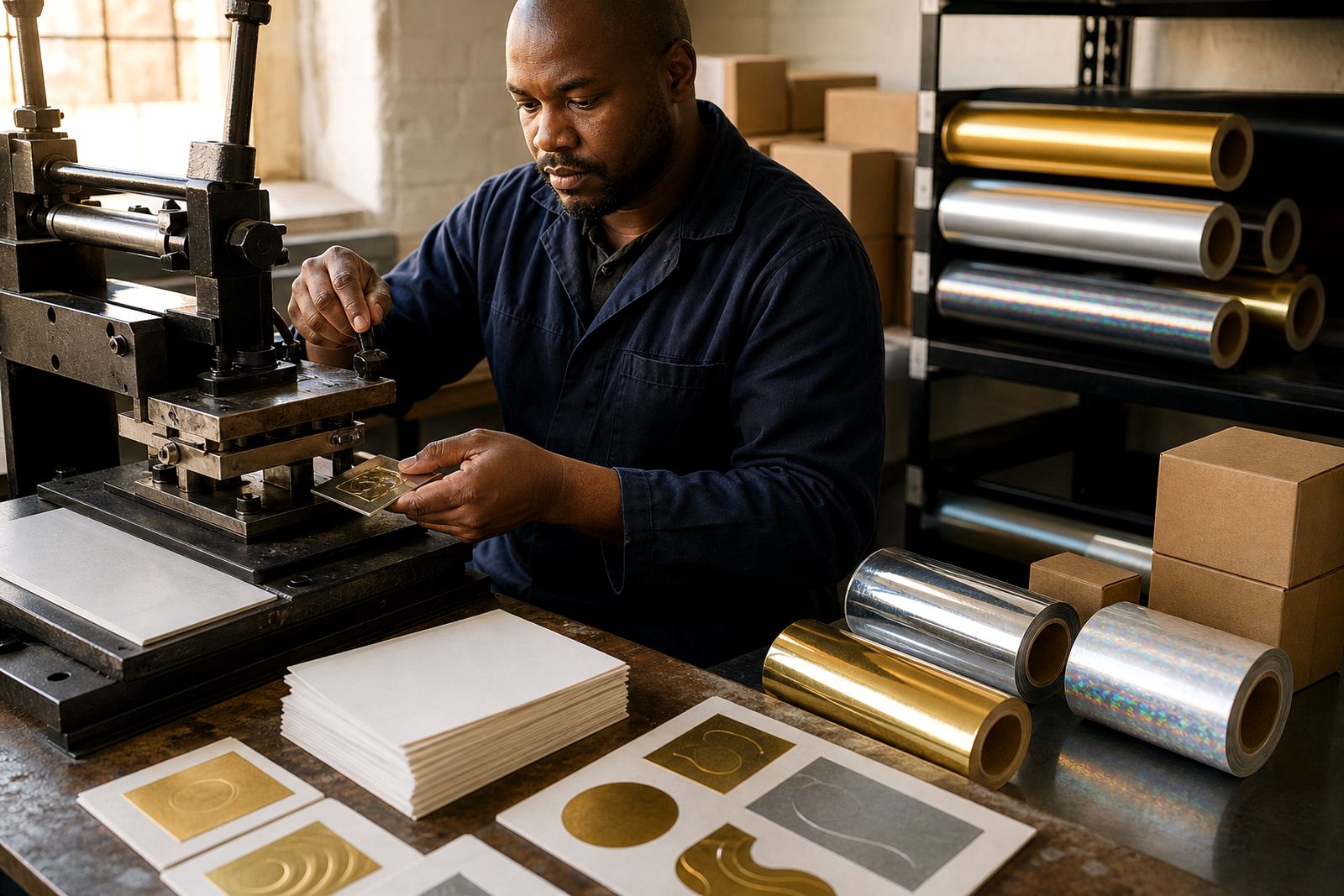
Core finishing terms
Hot stamping depends on a few simple terms that describe how the foil leaves the carrier film and bonds to the substrate. Release is the point where the foil layer lets go cleanly. Dwell is the time the die stays in contact with the material. Pressure is the force applied by the press, and make-ready is the set-up work that helps the die meet the job evenly.
For metallic foils such as gold, silver, copper and bronze, the right balance of these three controls matters more than any single setting. Too little heat or dwell can leave broken image areas. Too much can flatten detail or cause a dull finish. The same applies to pigment foils, holographic foils and security foils, although each type has its own starting point for testing.
When you need a quick reference, keep your samples and notes with the press settings sheet and compare results against the foil selection guide.
Set up on press
Good set-up starts with the press type, the die material and the substrate. On platen, cylinder and roll-to-roll presses, the same foil can behave differently because heat transfer and contact time are not the same. Magnesium, copper and brass dies also carry heat differently, so the starting point for one job may not suit the next.
For practical testing, begin within the normal temperature window for the foil and substrate combination, then check transfer, edge sharpness and any sign of over-release. On coated board, soft-touch laminate, labels, cartons and book covers, the surface finish can change how quickly the foil releases. That is why the first pull should always be treated as a test, not a final setting.
- Check die temperature and allow it to stabilise before running samples.
- Confirm dwell, pressure and release settings one at a time.
- Inspect the first pull for gaps, soft edges or overburning.
- Record the finished result for the next make-ready.
For substrate questions, compare the job with the substrate compatibility chart.
Foil types in practice
Different foil families are used for different finishes. Metallic foils are chosen for strong reflective colour and decorative branding. Pigment foils in black, white and process colours are used when you need an opaque or flat colour effect rather than a mirror finish. Holographic and diffraction foils are selected for patterned light movement. Security foils are used where tamper evidence, authentication or controlled appearance is needed.
Specialty foils for leather, plastics, textiles and soft-touch laminate need careful testing because the surface texture and chemical finish can affect release. A leather workshop may need a different setup from a label house or packaging line, even when the design is similar. Foil rolls can also be slit to roll width so that they suit the press and the job width more closely.
Use sample books and small test runs to compare the finish before full production. If the job involves protection or verification, review Security options overview.
Common checks
Most production problems can be reduced by checking the same basic points every time. The aim is to separate a foil issue from a press issue, a die issue or a substrate issue. If transfer is patchy, the first question is usually whether the press is delivering the right heat, dwell and pressure for that material.
Another common check is the quality of the die and the make-ready. A die that is not level or a pack-up that is uneven can cause weak areas, especially on larger solids or fine detail. If the job uses coated board, laminated stocks or textured materials, the surface may need a slightly different approach from an uncoated sheet.
| Check | What to look for |
|---|---|
| Transfer | Full image release with no broken areas or missed detail |
| Edges | Sharp edges without feathering, blur or crushing |
| Surface | Even gloss or colour with no dull patches |
| Setup notes | Recorded settings for the next run and repeat work |
If the result changes from sheet to sheet, use the troubleshooting index before adjusting too many variables at once.
Keep records
Good records make repeat work easier. Note the foil type, substrate, die material, press type, temperature start point, dwell, pressure, and any changes made during the run. That record is useful whether the job is a carton run, a label run, a leather item or a short sample approval.
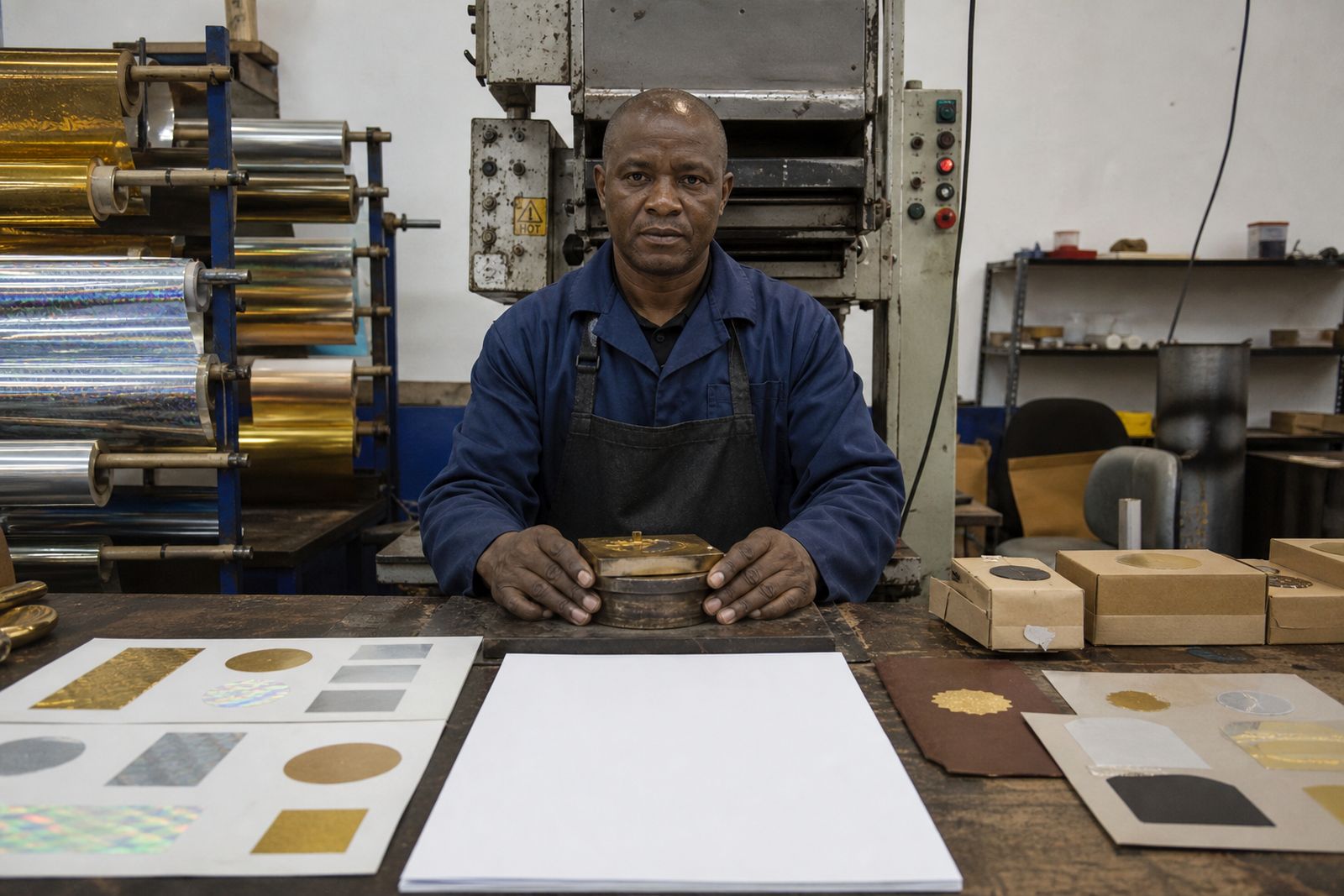
It also helps to keep swatches with the exact foil reference used on the job. A swatch book or sample card gives a quick visual comparison when a customer wants a similar finish later. Store rolls correctly, keep them wrapped when not in use and protect them from damage while moving between the store and the press. For handling and storage notes, see Care and storage and Shipping rolls.
If you are matching a colour or finish from an old job, bring the sample to the Colour matching process section or send a request through the contact form.
What our Hot Stamping Foil customers say
Verified Google reviews
Also worth a look
Ask about a foil for your job
Send a note through our contact form with the substrate, the press you run (platen, cylinder or roll-to-roll), the finish you are after and the run length, and we will come back with a foil grade, a sample and a quote.
Open the contact form