

Care and storage
Store foil the right way and it stays clean, flat and ready for press. A few simple checks can save time on make-ready and reduce waste.
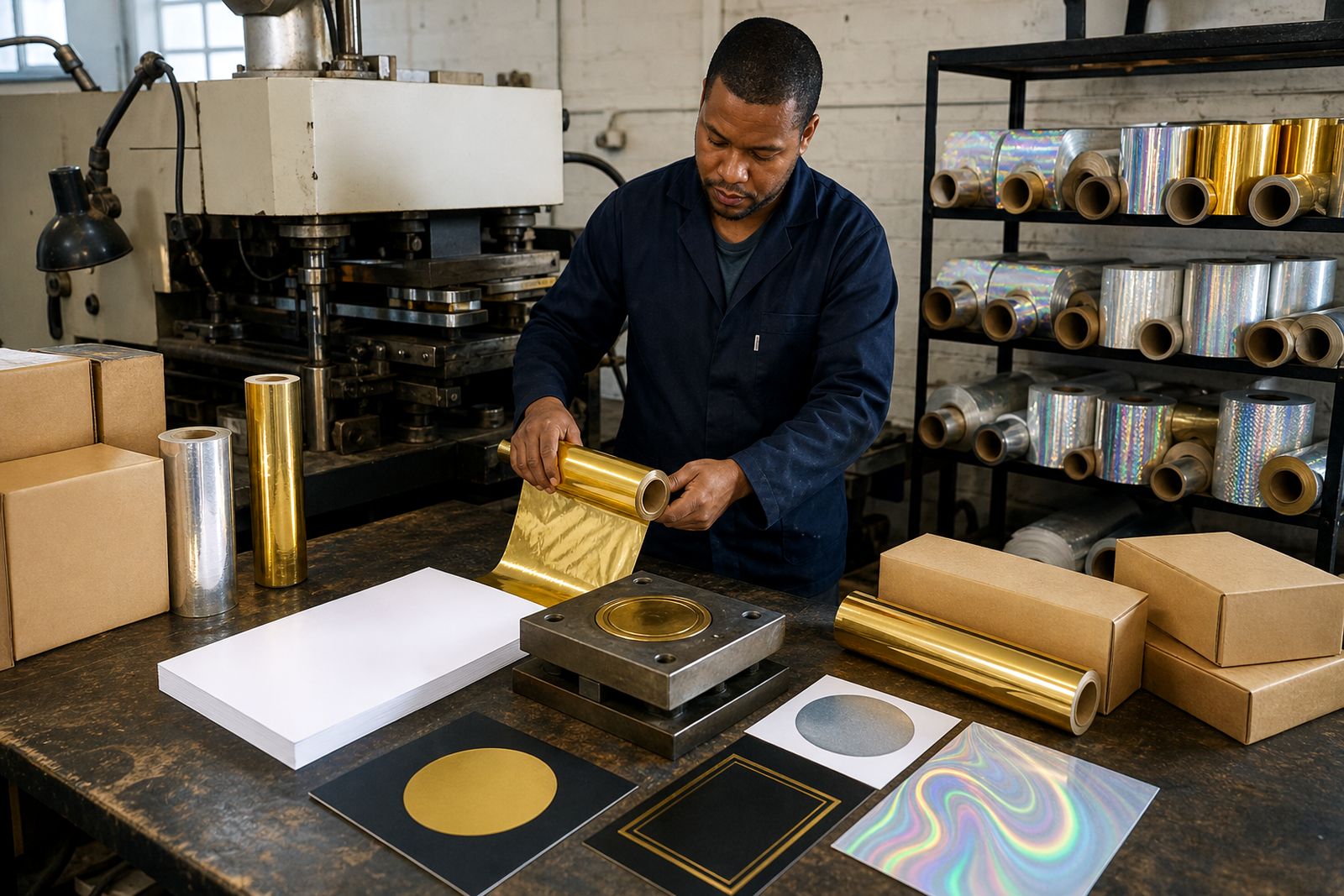
Keep rolls stable
Foil is sensitive to heat, direct sun, dust and heavy pressure. Keep rolls in their original wrap until needed, and store them flat in a dry area away from windows, hot pipes and floor moisture.
If a roll has been delivered from a cooler space, let it sit in the press room before opening so the core and outer layers reach a similar temperature. That helps reduce condensation and edge lift when you start working.
- Check that the roll is not crushed at the ends.
- Keep wrapped rolls off the floor and out of direct sunlight.
- Allow cold stock to acclimatise before unwrapping.
- Use first-in, first-out stock rotation.
For wider handling and shipping guidance, see Shipping rolls.
Match storage to foil type
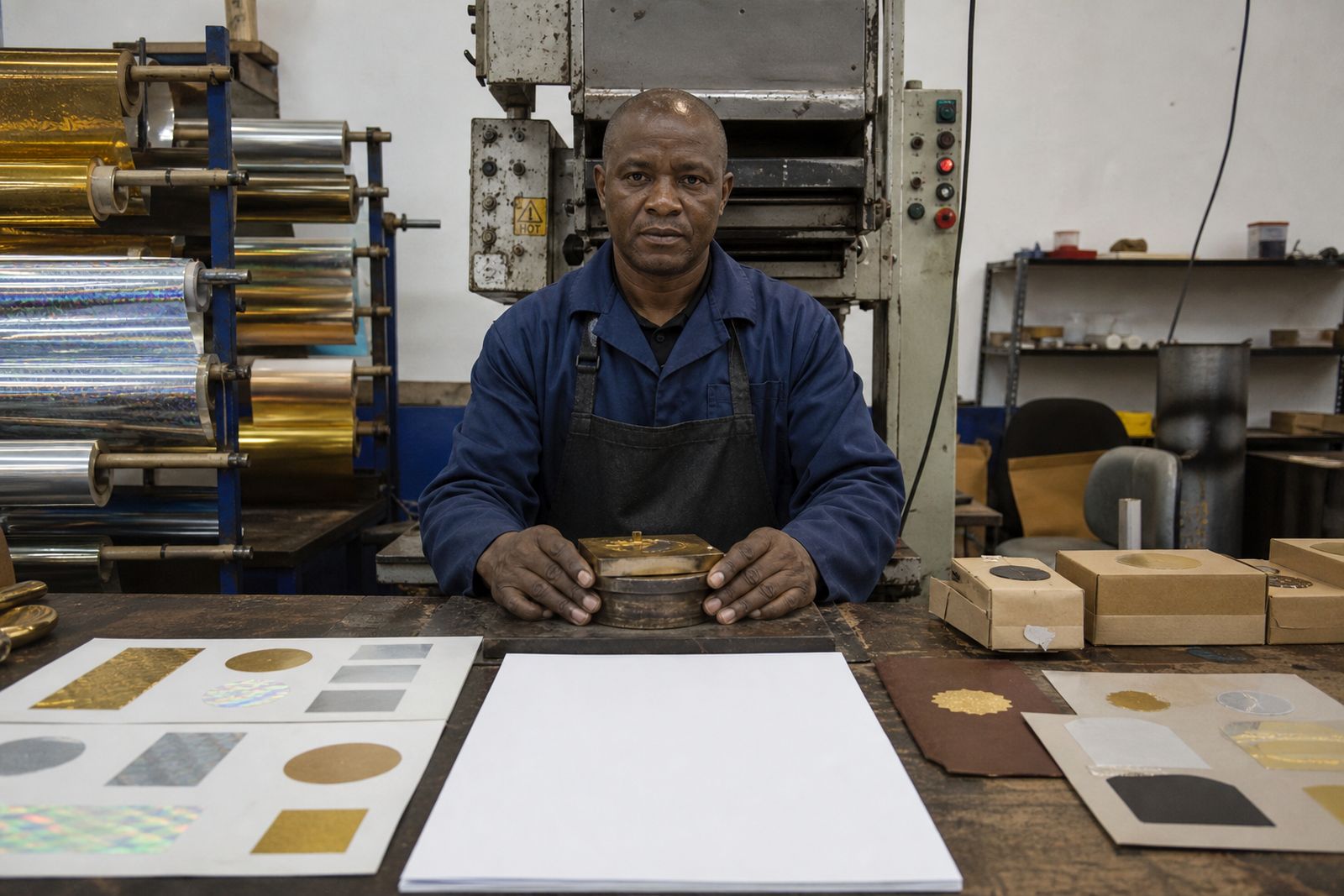
Different foil constructions need the same careful handling, but some are less forgiving than others. Metallic foils such as gold, silver, copper, bronze, mirror and satin should stay free of scratches and pressure marks. Pigment foils, including black, white and process colours, should be protected from dust and crease damage. Holographic, diffraction and security foils need clean storage so the pattern and surface stay sharp.
Foils used on leather, plastics, textiles and soft-touch laminate can be more sensitive to handling and ambient conditions. Keep sample cuts in sealed sleeves or folders, and label offcuts clearly so they do not get mixed up with unrelated stock.
If you are choosing a roll for a specific board, film or fabric, the substrate compatibility chart and Foil selection guide are useful starting points.
Prepare before press
Before you take a roll to press, check the edge, the core and the wrapper. A small nick or dent can affect tracking and tension on platen, cylinder or roll-to-roll equipment. If the foil has been sitting in a warm room, do not load it straight into a job without checking for curl or blocking.
When setting up, start with the press settings sheet and work from there. Typical starting temperatures can vary by foil type and substrate, so test in small steps rather than forcing a full run.
| Check | What to look for |
|---|---|
| Foil edge | Clean edge, no crush or fraying |
| Roll tension | Even unwind with no telescoping |
| Surface | No dust, fingerprints or blocking |
| Test pull | Consistent release and coverage |
Use the press settings sheet together with the QA checklist for a controlled start-up.
Store samples and offcuts
Sample books, swatches and press-tested offcuts are valuable records, especially when you are matching colours, finishes or release behaviour on a repeat job. Keep them dry, flat and labelled with the substrate, die type and press conditions used.
For repeat work, note the practical details that matter most: temperature window, dwell, pressure, release profile, die material and any make-ready changes. That way you can compare new stock against a proven result instead of starting from scratch.
Use the sample book index to keep samples organised, and the colour matching guide when a client wants a close visual match across runs.
Solve storage problems early
If foil starts showing weak release, patchy coverage or scuffing, do not assume the press is the only issue. Storage conditions can affect how the foil behaves before it reaches the die. Heat, pressure from stacking and dirty handling often show up later as press faults.
Review the basics first: how the roll was stored, how long it was opened, whether the substrate is compatible, and whether the press settings suit that foil family. On coated board, soft-touch laminate, labels, cartons, book covers and leather goods, small changes can make a visible difference.
When you need a deeper fault check, use the troubleshooting index, the die making notes and the contact form for practical advice or to ask for a quote.
What our Hot Stamping Foil customers say
Verified Google reviews
Also worth a look
Ask about a foil for your job
Send a note through our contact form with the substrate, the press you run (platen, cylinder or roll-to-roll), the finish you are after and the run length, and we will come back with a foil grade, a sample and a quote.
Open the contact form