

Shipping rolls
Use these notes to prepare foil rolls for safe courier or pallet despatch. Keep the rolls clean, tight and easy to identify on arrival.
Pack the rolls correctly
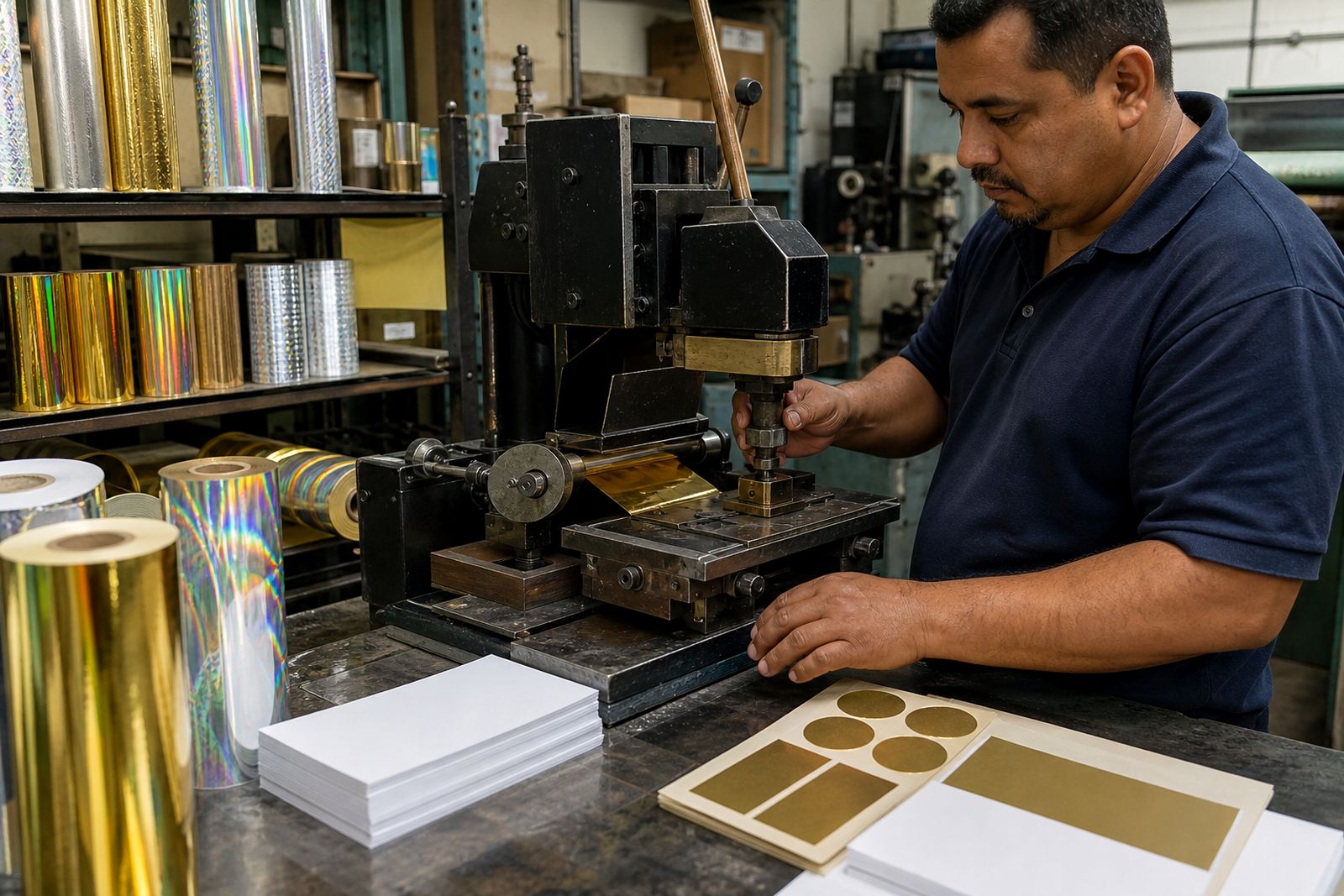
Foil rolls should be packed so the edge is protected and the roll cannot move in transit. Use the original carton where possible, or a rigid carton or pallet wrap that keeps the roll round and secure.
Keep each roll clean and dry before packing. If a roll has been slit to a specific width, keep that width clearly marked on the outside of the pack so the receiver can match it to the press job.
- Check the core is sound and the roll is wound tight
- Protect the roll edges with end caps or firm packing inserts
- Seal the pack so dust and moisture cannot enter
- Mark the foil type, colour and slit width on the label
Use the right label
A clear label saves time at receiving, kitting and press setup. Include the foil family, finish and width, then add the intended press or job note if needed.
For example, a metallic gold roll, a satin silver roll or a holographic roll should be easy to identify without opening the carton. If the order contains several rolls, label each one individually and keep the packing list with the shipment.
When you need help choosing the right foil family for a carton, label, book cover or leather item, use the foil selection guide or ask for advice through the contact form.
Choose courier or pallet
Small orders, sample rolls and narrow slit widths are often sent by courier when the pack is firm and the roll is well protected. Larger or heavier consignments are better sent on a pallet so the rolls stay upright and are not crushed by stacked parcels.
For pallet despatch, place rolls so they cannot roll against each other. Keep the load even and wrap it securely before collection. A pallet is also useful when sending mixed foil types, such as metallic, pigment, holographic and security foils in one consignment.
If the job needs wider planning around substrate, press setup or finishing, the press settings sheet and substrate compatibility chart can help before dispatch.
Avoid heat and pressure damage
Foil rolls are sensitive to heat, pressure and rough handling. Do not leave packed rolls in direct sun, near hot machinery or under other heavy cartons before collection. That can affect the roll shape and the release layer before it reaches the press.
Once received, store the rolls flat and dry until needed. For practical care notes on handling after despatch, see Care & Storage. If a roll is intended for leather, plastics, textiles or soft-touch laminate, keep the pack clean and closed until press make-ready.
Typical starting test windows will vary by foil type, die and substrate. Test carefully on press rather than assuming the same settings will suit every job.
Check before dispatch
Before a roll leaves the workshop or warehouse, a short final check helps avoid delays at the press. Confirm the roll count, widths, finish and packaging method, then match them to the order or packing note.
| Check | What to confirm |
|---|---|
| Roll identity | Foil family, colour or effect, and slit width |
| Pack condition | No crushed ends, loose wrapping or visible dirt |
| Load method | Courier carton or pallet, depending on size and weight |
| Receiver note | Any press or substrate notes needed on arrival |
For sample rolls, swatch books or advice on make-ready, you can also use the sample book index, QA checklist and troubleshooting index.
What our Hot Stamping Foil customers say
Verified Google reviews
Also worth a look
Ask about a foil for your job
Send a note through our contact form with the substrate, the press you run (platen, cylinder or roll-to-roll), the finish you are after and the run length, and we will come back with a foil grade, a sample and a quote.
Open the contact form