

Foil selection guide
Learn how substrate, finish, press type and die setup guide the right hot stamping foil choice.
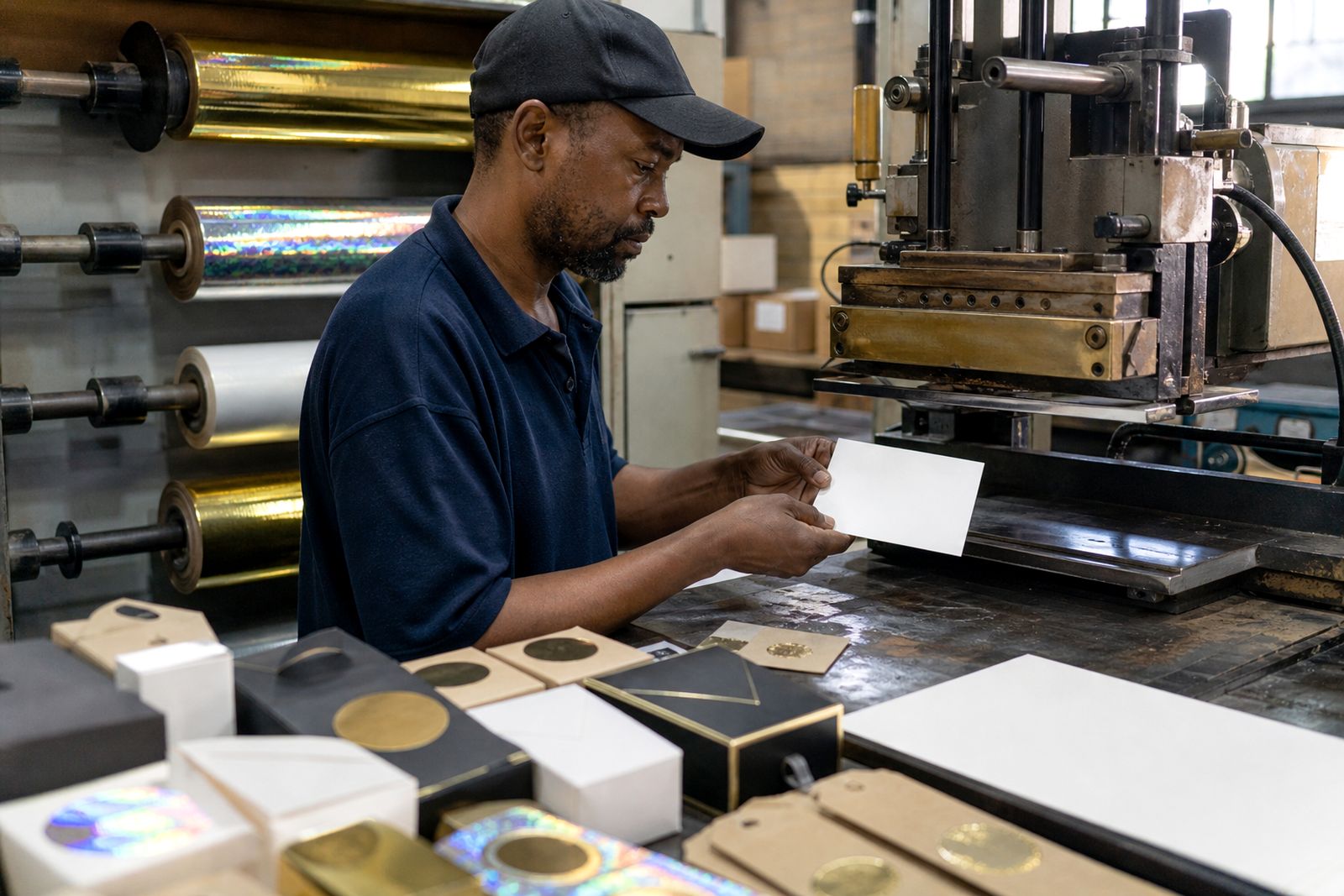
Start with the substrate
The first question is what you are stamping onto. Board, coated cartons, labels, soft-touch laminate, plastics, textiles and leather all behave differently, so the foil choice starts there.
For paper and board, metallic and pigment foils are usually the first options to test. For plastics, textiles and leather, choose foils made for those surfaces and confirm the release profile before running volume. If the brief mentions a premium look but no finish, compare the foil families in the sample book index and the substrate compatibility chart.
On coated board, keep an eye on surface slip, ink coverage and varnish. On soft-touch laminate, test carefully because the surface can need a different make-ready approach from plain board.
Choose the visual effect
The finish should suit the artwork and the product range. Metallic gold, silver, copper, bronze, mirror and satin are useful when the client wants shine, reflection or a warmer tone. Pigment foils in black, white and process colours suit solid branding, text and cleaner flat colour areas.
Holographic and diffraction foils add movement and pattern. Security foils are used where recognition or controlled appearance matters. Specialty foils can be chosen for leather, plastics, textiles and other difficult surfaces, but only after checking the substrate and the press setup.
If the brief is vague, ask whether the goal is reflection, colour, texture, or security. That answer saves time and avoids ordering the wrong foil family.
Check the press setup
Foil performance depends on the press as much as the foil itself. Platen, cylinder and roll-to-roll presses each need their own make-ready, and the starting settings should be tested on press before production.
As a practical starting point, trial the temperature window, dwell time and pressure in small steps rather than changing several things at once. Keep notes on release behaviour, especially where the foil should cleanly release from the carrier and sit sharply on the substrate.
- Confirm the press type and die material before choosing a foil.
- Test a small area first and check edge definition.
- Adjust one variable at a time, then recheck the impression.
For settings guidance, see the press settings sheet and the troubleshooting index.
Choose the right die
Die choice affects heat transfer, pressure and detail. Magnesium, copper and brass dies each have their place, depending on the run, the detail level and the press.
Fine detail, larger solid areas and repeated production all benefit from the right die and proper make-ready. If the job is for labels, cartons or leather goods, confirm the line weight and the depth of detail before the die is made or adjusted.
For practical notes on die preparation and common checks, use the die making notes. If the result is patchy, dull or incomplete, compare it against the QA checklist before changing foil.
Order and handle correctly
Foil is supplied slit to roll width, so the roll size should suit the press and the job layout. Before ordering, confirm the web width, rewind direction and any special handling needs for the pressroom.
Keep swatch books and samples close to the artwork sign-off stage. That makes it easier to compare shades, finishes and surface behaviour before the run starts. If colour matching is critical, use the colour matching guide rather than guessing from a screen image.
For storage and movement of rolls, refer to Care & Storage and Shipping rolls. If you are ready to confirm the right foil, ask for a quote through the contact form.
| Job factor | What to check |
|---|---|
| Substrate | Board, laminate, plastics, textiles or leather |
| Finish | Metallic, pigment, holographic, diffraction or security |
| Press | Platen, cylinder or roll-to-roll |
| Tooling | Magnesium, copper or brass die |
What our Hot Stamping Foil customers say
Verified Google reviews
Also worth a look
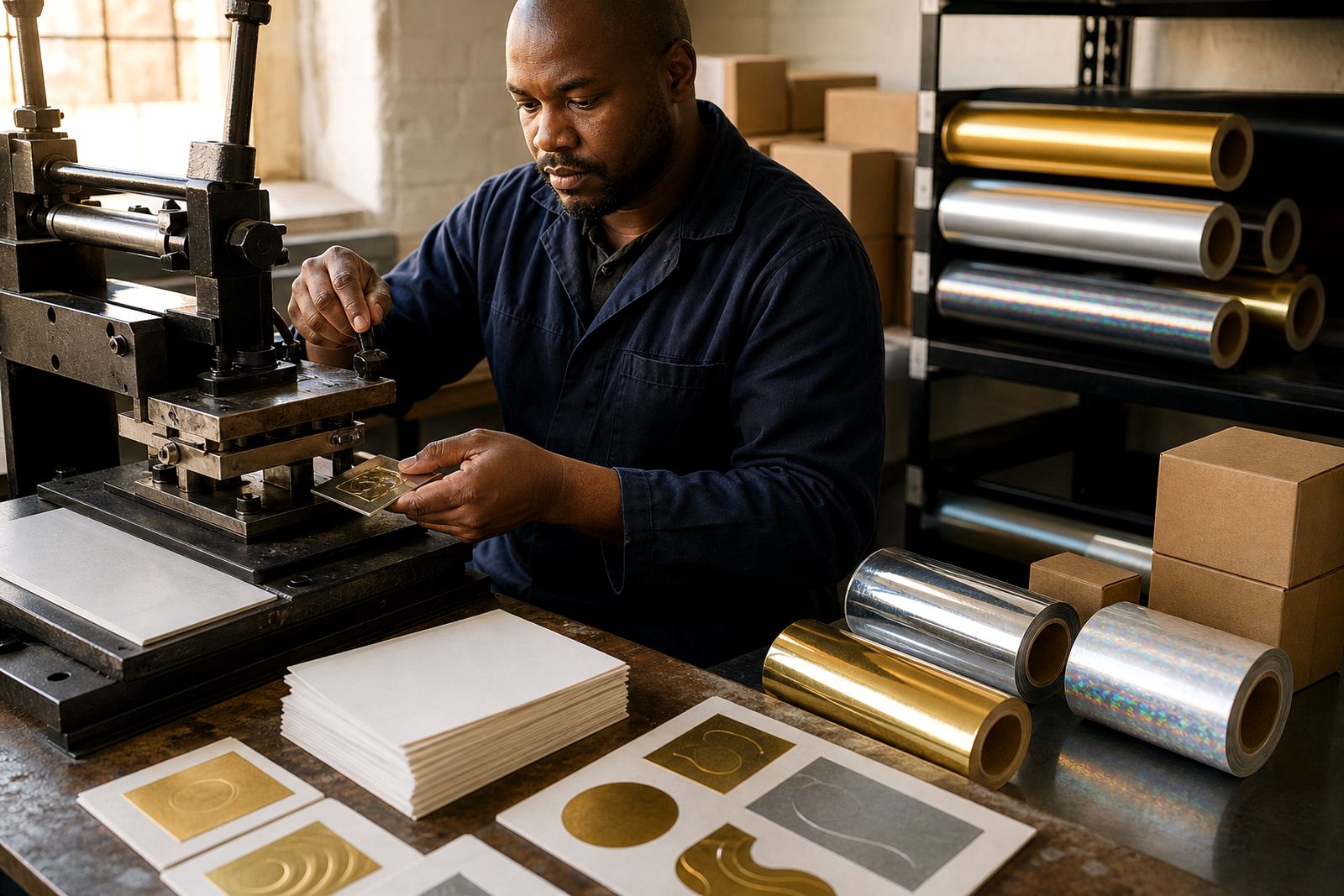
Ask about a foil for your job
Send a note through our contact form with the substrate, the press you run (platen, cylinder or roll-to-roll), the finish you are after and the run length, and we will come back with a foil grade, a sample and a quote.
Open the contact form