

Spot vs flood foil
Spot or flood, the right foil layout depends on artwork, substrate and press method. The aim is clean impact without wasting coverage.
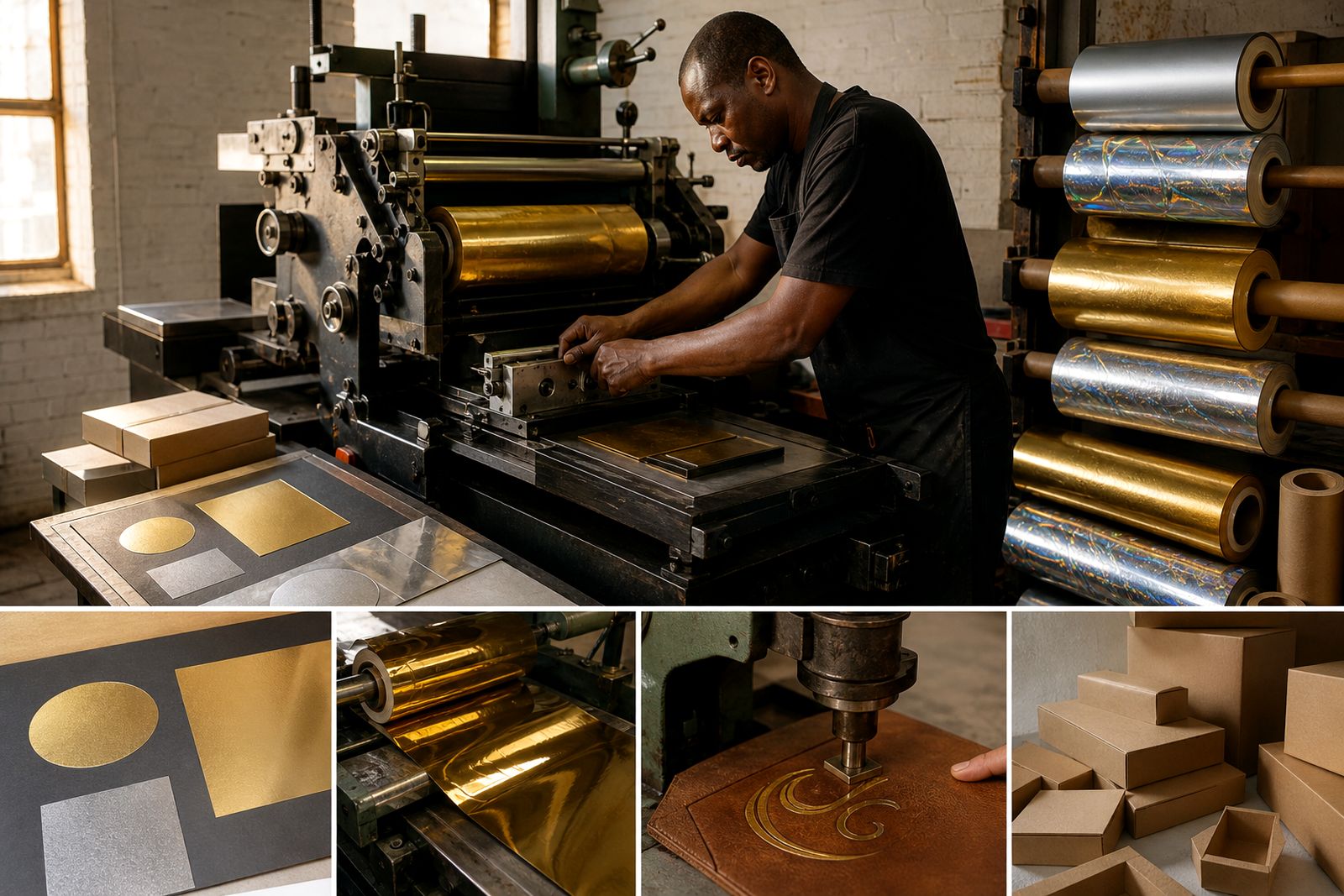
When spot foil makes sense
Spot foiling keeps the foil to selected areas such as a logo, border, title or fine detail. It works well when the print must stay readable and the foil is there to guide the eye, not cover the whole surface.
Use spot foil when the job has:
- one clear focal point
- small areas that need crisp detail
- mixed print and foil on the same sheet
- a layout that must stay light in coverage
For labels, cartons and book covers, spot foil often gives a cleaner result on coated board and smoother papers. It also makes die prep easier because the image area is more contained. If you need help choosing a foil type for the job, see Key types of gold stamping foil and Why pigment foil still matters.
When flood foil is the better call
Flood foil covers a larger area, sometimes the full panel or sheet. It suits designs that need a strong reflective field, a coloured block or a uniform background for premium packaging and presentation work.
It is useful where the artwork can support a wide foil field without losing detail. On coated board, flood foil can give an even appearance if the surface is smooth and the die is prepared properly. On soft-touch laminate, testing is important because the release and adhesion behaviour changes.
Flood coverage can also be used with metallic gold, silver, copper, bronze, mirror or satin foils, depending on the look required. For related substrate advice, read Foil on soft-touch laminate.
Choose by press and substrate
The press type matters as much as the artwork. Platen, cylinder and roll-to-roll presses each place different demands on dwell, pressure and release. A layout that suits a platen job may need adjustment for web work or narrow label formats.
As a starting point, test within typical temperature windows for the foil and substrate you are using, then adjust pressure and dwell to suit the die and the run. Good make-ready is essential for both spot and flood work, especially where solid areas, fine lines or textured boards are involved.
| Situation | Practical bias |
|---|---|
| Fine logo or title | Spot foil |
| Large solid panel | Flood foil |
| Soft-touch laminate | Test both carefully |
| Roll-to-roll labels | Keep coverage controlled |
If the job includes narrow-web work, the notes in narrow-web label tips are worth a look.
Keep the die and release in mind
Foil coverage changes how the die behaves. A broad flood area may need different relief and cleaner breakaway than a small spot image. The die material also matters, whether you are working with magnesium, copper or brass.
Release profile is one of the main variables in whether a job pulls cleanly. If the foil is being used on leather, plastics or textiles, test the combination before a full run. The same applies to security foils and holographic effects, where detail and consistency matter.
For practical setup notes, see Choosing release profiles and Die prep checklist.
Plan the finish before the quote
Choosing between spot and flood foil is easier when the artwork is reviewed early. That allows the correct foil type, slit width and press setup to be matched to the substrate and the finish you want.
For trade jobs, it helps to think through:
- coverage area and image detail
- board, film or leather substrate
- press type and run length
- die choice and make-ready time
- foil colour, sheen and effect
Swatch books, samples and press-side advice can help narrow the choice before production starts. If you need a supply quote or want to check a layout, use the contact form. For broader browsing, visit the Journal section or products.
What our Hot Stamping Foil customers say
Verified Google reviews
Also worth a look

Ask about a foil for your job
Send a note through our contact form with the substrate, the press you run (platen, cylinder or roll-to-roll), the finish you are after and the run length, and we will come back with a foil grade, a sample and a quote.
Open the contact form