

Training your press crew
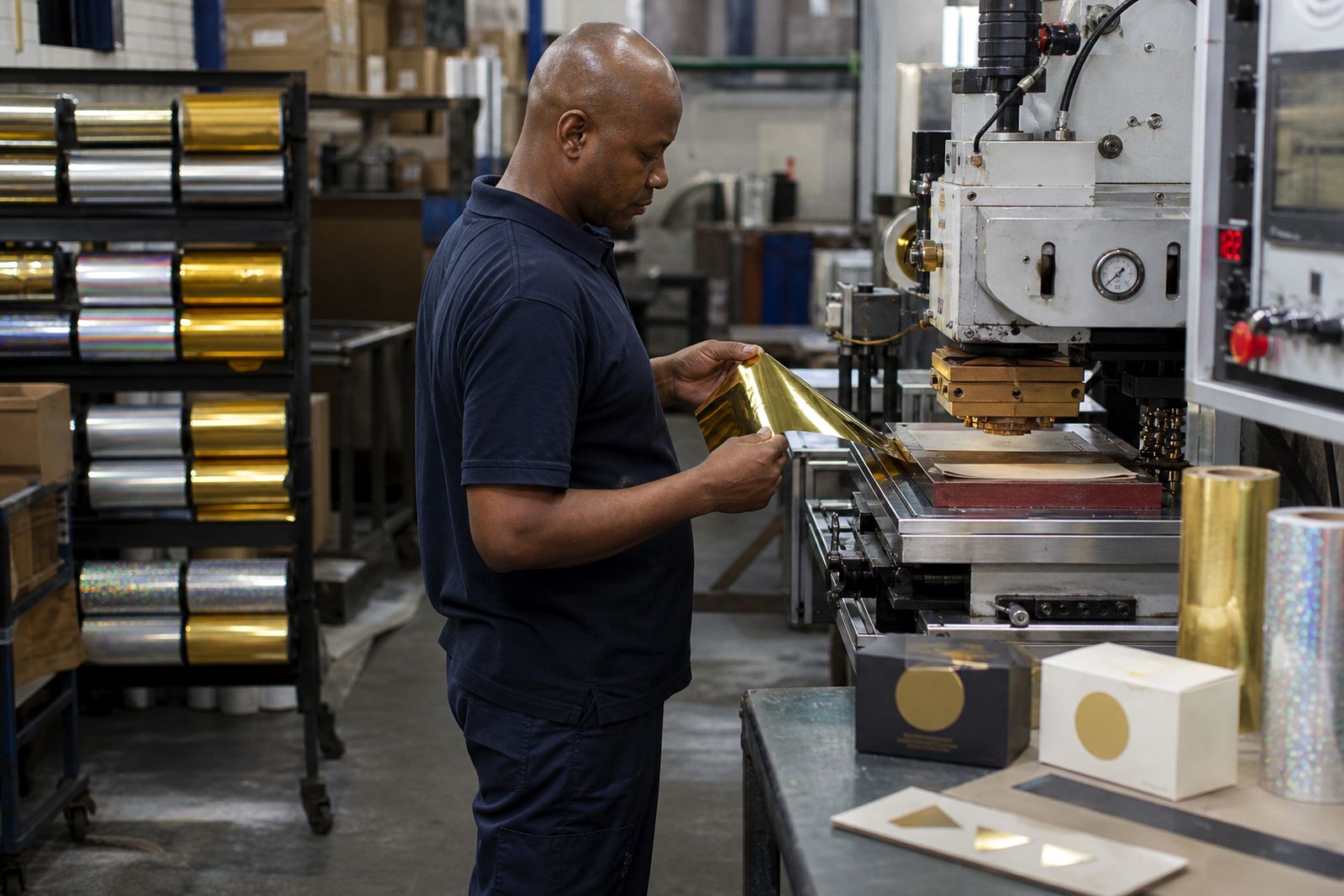
Use this as a short training syllabus when a new platen arrives on the floor. It keeps the focus on setup, control and repeatable foil results.
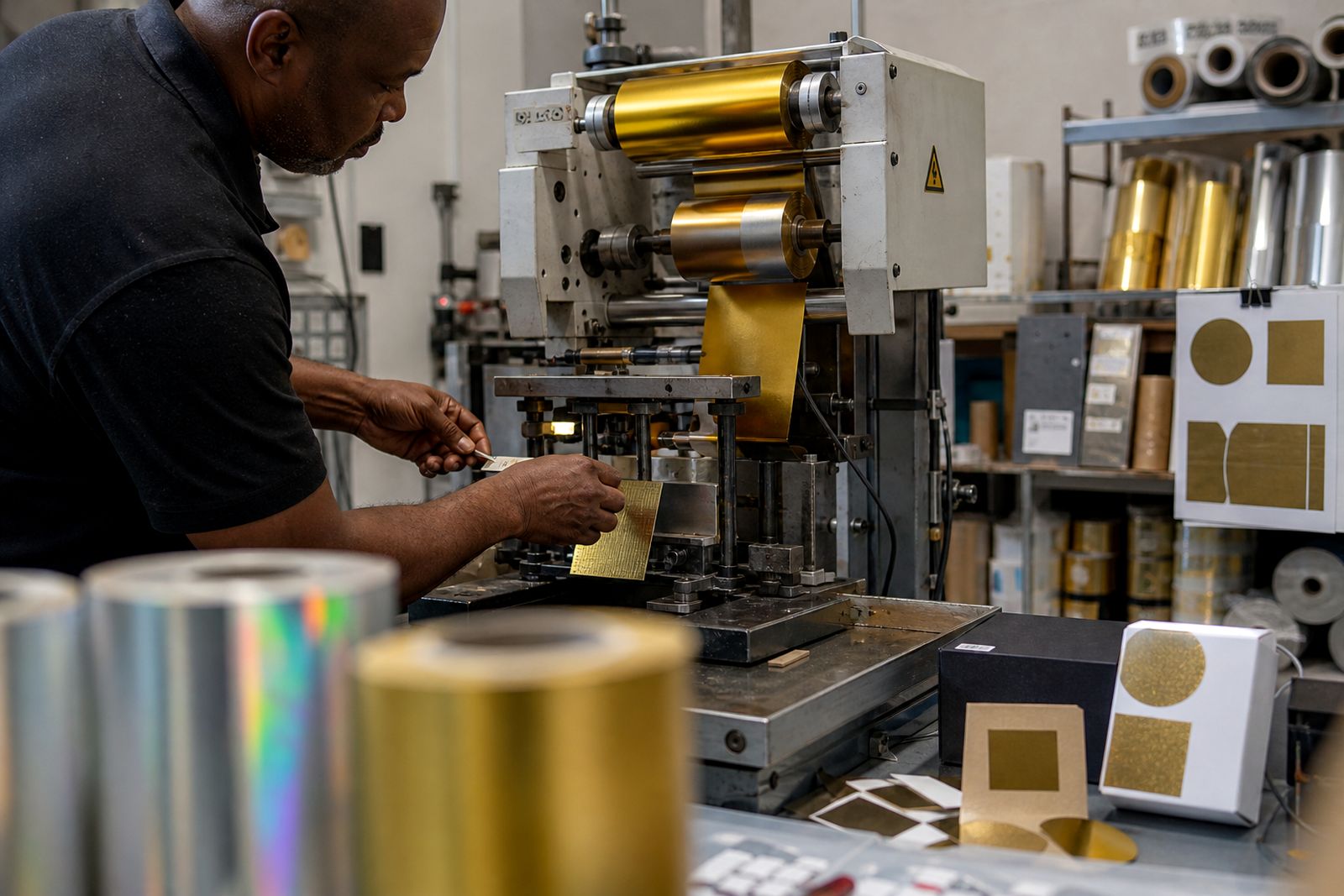
Start with the foil and the job
Before anyone reaches for the die, make sure the crew knows what foil is going through the press and why. Metallic foils, pigment foils, holographic foils and security foils each behave differently on coated board, soft-touch laminate, labels, cartons and leather goods.
Begin with a quick job check:
- Identify the foil type and finish
- Check the substrate and whether it has coating, texture or soft-touch lamination
- Confirm the die material, whether magnesium, copper or brass
- Agree the press type, platen, cylinder or roll-to-roll
For product guidance, keep the crew close to the products and applications sections, then ask for the right swatch book or sample before setup starts.
Set a sensible starting point
A good first pull comes from a controlled starting point, not guesswork. Train operators to treat temperature, dwell and pressure as linked settings, not separate fixes.
Use starting ranges only for testing. For many jobs, the first trial may begin around 90 to 120 degrees Celsius, then move up or down in small steps while checking release and image fill. Dwell should be just long enough for transfer, without overcooking the foil. Pressure should be firm enough for clean contact, but not so heavy that fine detail closes up.
If the foil is lifting, patchy or dull, the answer is usually in the window, the pressure or the surface prep. The right foil also matters. Review the guidance in temperature windows explained and choosing release profiles.
Make-ready matters
Press crew training should spend real time on make-ready. Clean makeready work saves time later, especially on short runs and fine detail.
- Check die height and mounting
- Make sure the image is even across the form
- Inspect the substrate for dust, powder or surface contamination
- Confirm the foil route is straight and the roll is tracking correctly
- Test small areas before committing to the full sheet or web
On narrow web and label work, a small tracking error can affect edge definition quickly. On cartons and book covers, uneven pressure may show up as weak blocks or broken detail. Keep a simple checklist handy and use the die prep checklist for setup habits worth repeating.
Read the result and adjust
Train the crew to read the foil, not just the machine settings. A clean stamp should show full transfer, crisp edges and a finish that suits the chosen foil type.
Watch for these common signs:
- Too little heat or dwell can give weak release or incomplete fill
- Too much heat can over-soften the foil and blur detail
- Too much pressure can mark the board or flatten fine lines
- Poor release profile can leave residue or make stripping uneven
When the result is close but not right, change one setting at a time and keep notes. That habit helps the team build reliable settings for similar jobs later, whether the work is gold, silver, copper, satin or pigment.
Keep the press crew learning
Training does not stop after the first good pull. Keep short, practical sessions on specific foil jobs so the team can handle changeovers with confidence and less waste.
Useful topics for recurring training include:
- Matching pigment foil to artwork and colour expectations
- Working on soft-touch laminate without overpressing the surface
- Handling holographic and diffraction foils for controlled visual effect
- Basic foil handling, storage and roll care
- Quick checks for platen, cylinder and roll-to-roll presses
If the crew needs samples, swatch books or press-side advice on a live job, use the contact form. You can also browse more journal notes at Journal or review Foil on soft-touch laminate and Narrow-web label tips.
What our Hot Stamping Foil customers say
Verified Google reviews
Also worth a look
Ask about a foil for your job
Send a note through our contact form with the substrate, the press you run (platen, cylinder or roll-to-roll), the finish you are after and the run length, and we will come back with a foil grade, a sample and a quote.
Open the contact form