

Export packaging trends
Export buyers often want cleaner detail, steadier colour and packaging that holds up in transit. The foil choice, press setup and substrate all matter.
What buyers notice first
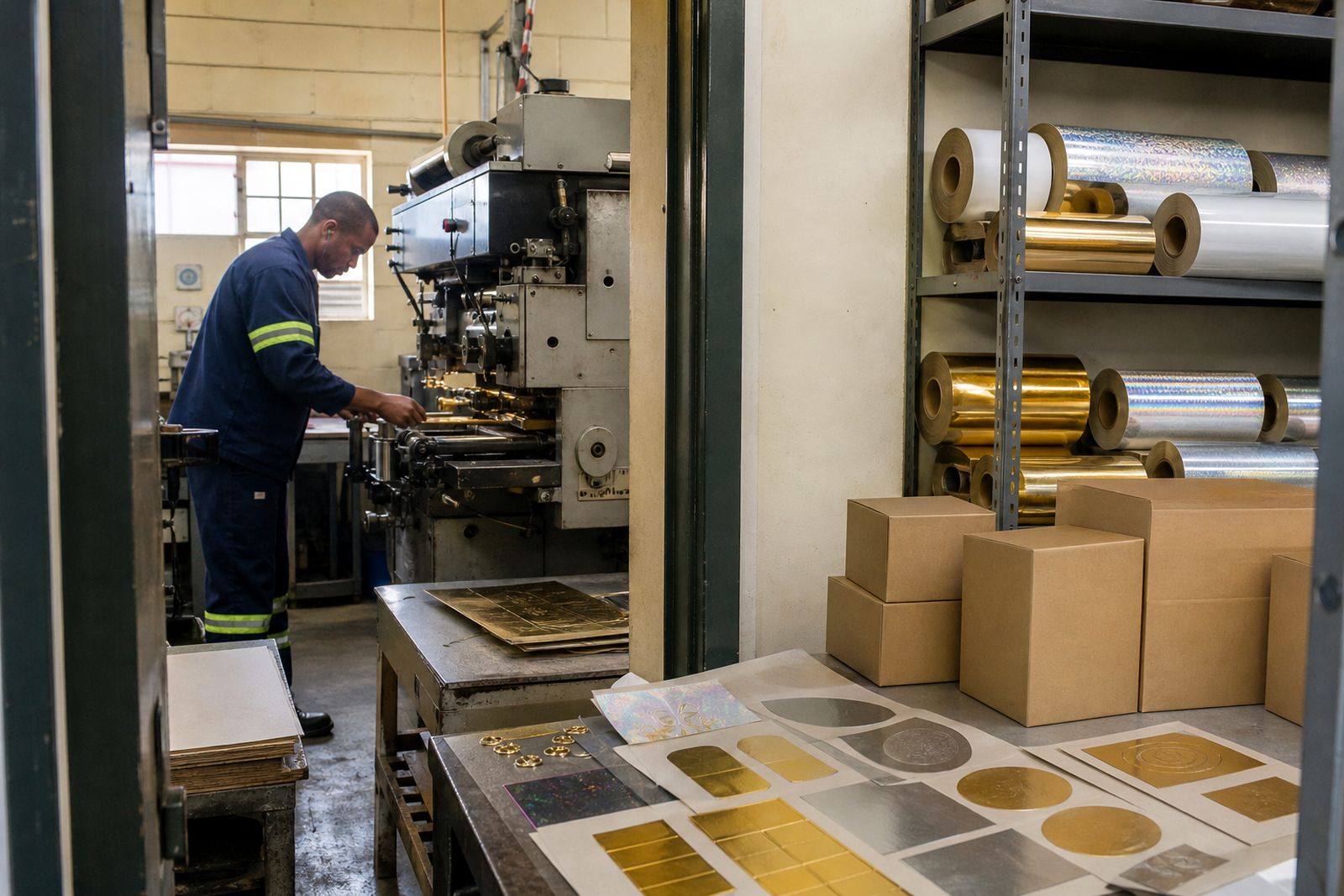
In export packaging, the first check is usually visual. Buyers look for even metallic coverage, sharp edges on logos and a finish that matches the carton, label or cover stock without patchy areas.
Gold, silver, copper and bronze are still used for premium cues, while mirror and satin effects can change how a pack reads under shelf lighting. Pigment foil is often chosen where a flatter, more controlled colour is needed, especially on brand blocks, type and warning elements.
For packs aimed at West African and EU markets, consistency across runs matters as much as the finish itself. That means testing the foil on the actual substrate, not only on a sample sheet.
Substrates and surfaces
Export packs often combine coated board, soft-touch laminate, labels, plastics or even leather components. Each surface changes how the foil releases and bonds, so the same foil can behave differently from one job to the next.
On coated board, surface smoothness and coating chemistry affect adhesion and detail. On soft-touch laminate, the press side setup often needs more attention because the surface can resist release. For plastics and textiles, specialty foils are usually tested with a narrower process window.
If you are planning a new pack, it helps to compare finishes early and keep a record of what works on each stock. Useful background reading includes Foil on soft-touch laminate and Leather stamping basics.
Set up for repeatability
Good export work depends on repeatable setup. Start with a sensible temperature window, then adjust dwell, pressure and release profile until the foil transfers cleanly without filling in detail or losing edge sharpness.
Typical starting points are only that, starting points. The right setting depends on the foil type, the substrate, the die and the press. Platen, cylinder and roll-to-roll machines all need different make-ready decisions, especially when the artwork is fine or the run is long.
For practical setup guidance, see Temperature windows explained and Choosing release profiles.
Choose the right foil type
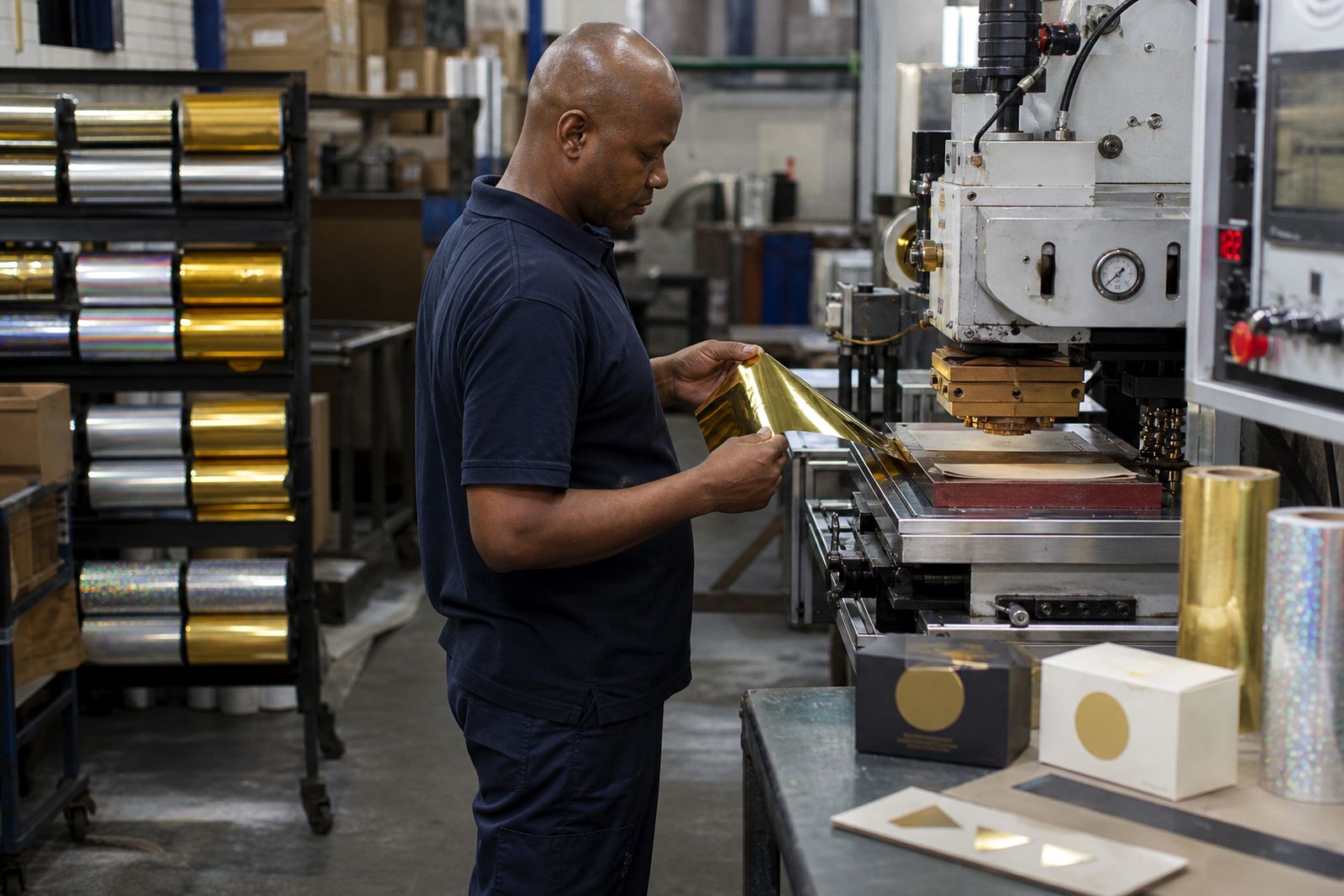
Export packaging often needs more than one finish in the same range. Metallic foils suit logos and borders, pigment foils suit text and flat colour areas, and holographic or diffraction foils can add movement where a security or attention effect is needed.
Security foils are useful where authenticity or tamper awareness matters. Specialty foils for leather, plastics and textiles are chosen when the substrate is not standard paperboard. If the job uses narrow-web labels, roll width and slit size should be matched to the press path to reduce waste and handling issues.
- Metallic foils for premium marks and accents
- Pigment foils for solid colour and text
- Holographic and diffraction foils for visual effect
- Security foils for controlled applications
- Specialty foils for leather, plastics, textiles and soft-touch laminate
More on visual effects is covered in our Holographic without the gimmick and Narrow-web label tips.
Plan the trial and handoff
Before a production run, ask for swatch books or samples and check the foil under the same light the buyer will use. That is the time to confirm colour tone, reflectivity and how the finish reads next to inks, varnish and board texture.
A short trial also helps with die choice. Magnesium, copper and brass dies can all be suitable, but the right option depends on artwork detail, run length and the press setup. If the job is moving into export packaging, leave space for a practical make-ready and a press-side test.
If you need help matching a finish or choosing a slit width, use the contact form and ask for a quote. For broader background, browse the Journal or the products and applications sections.
What our Hot Stamping Foil customers say
Verified Google reviews
Also worth a look
Ask about a foil for your job
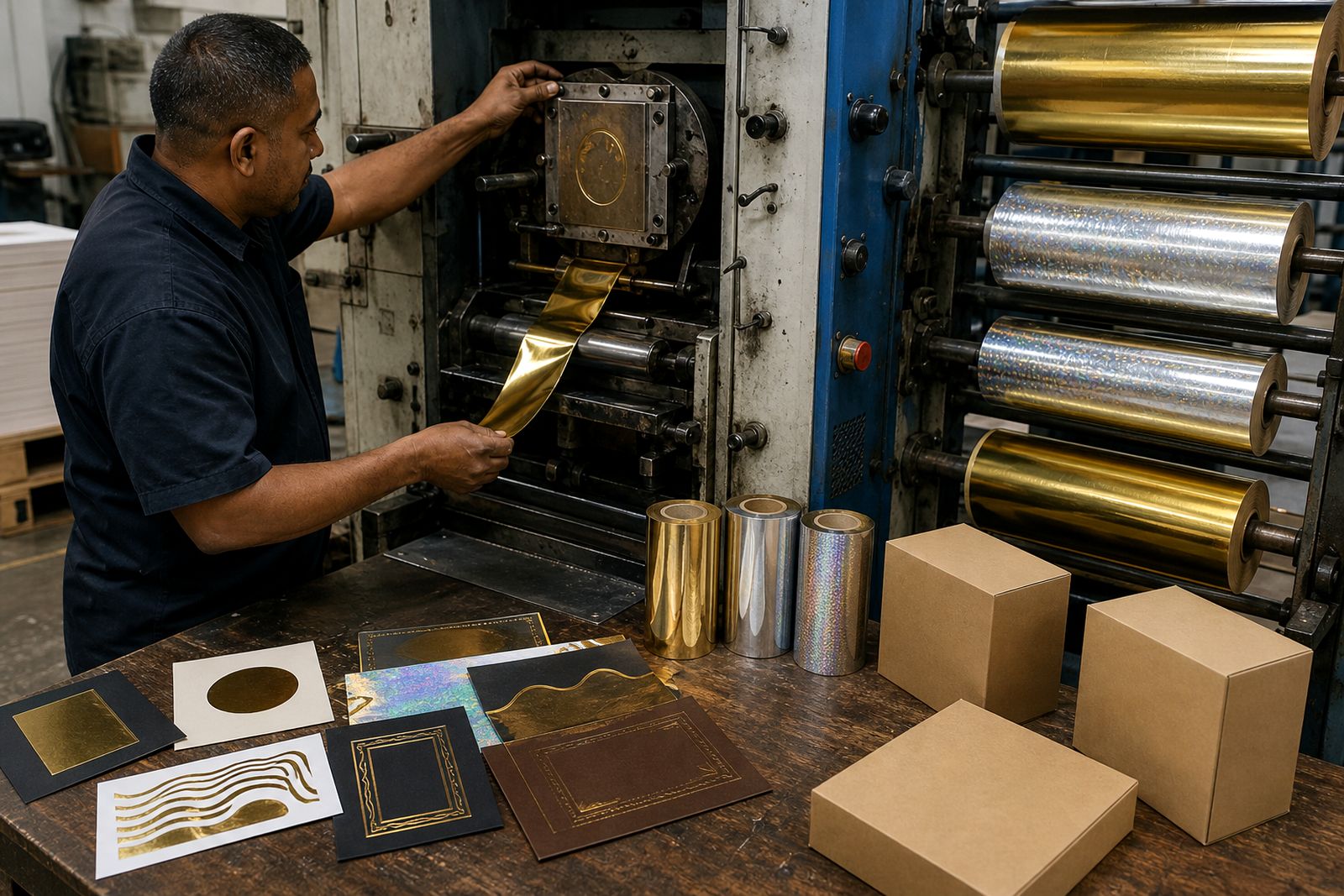
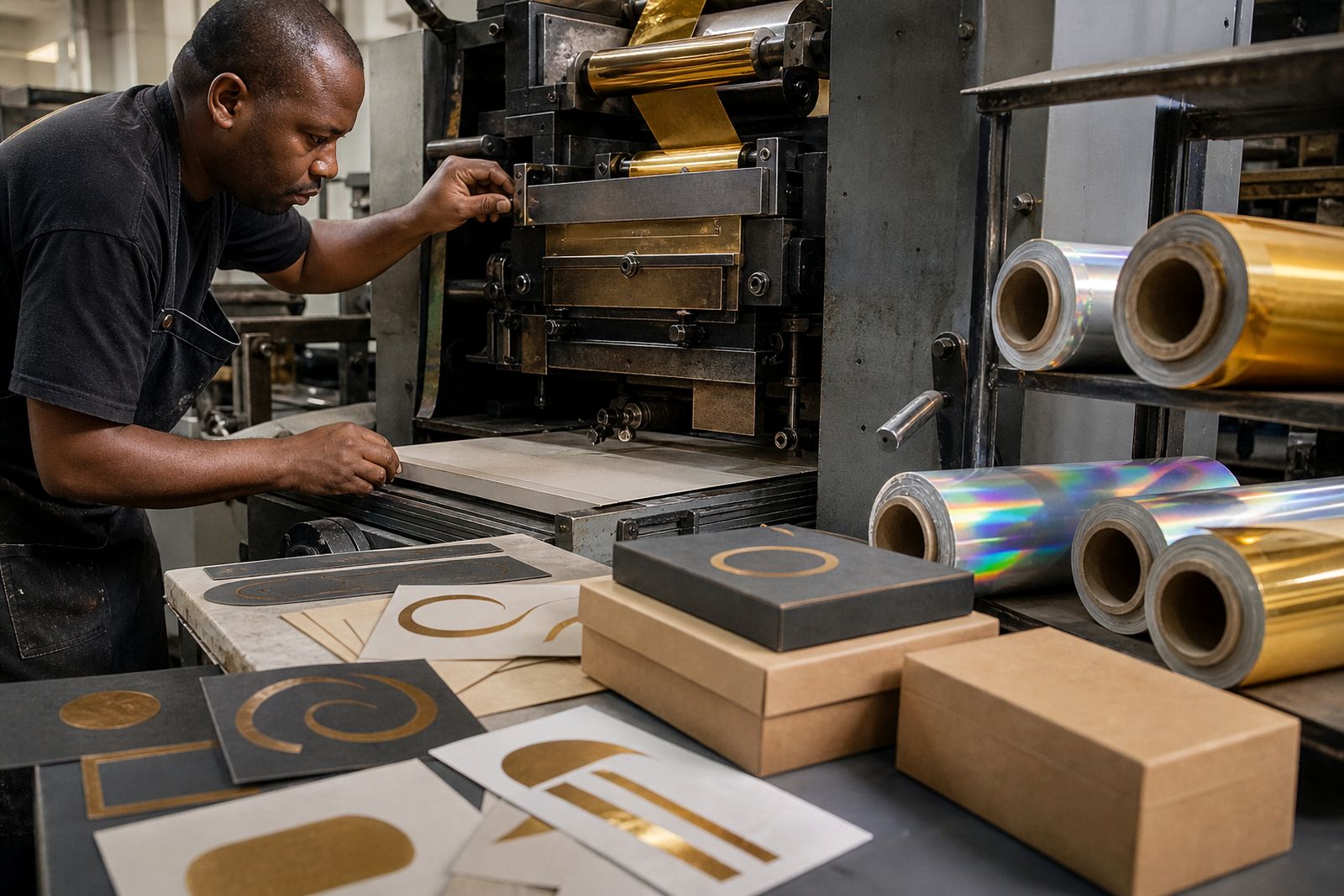
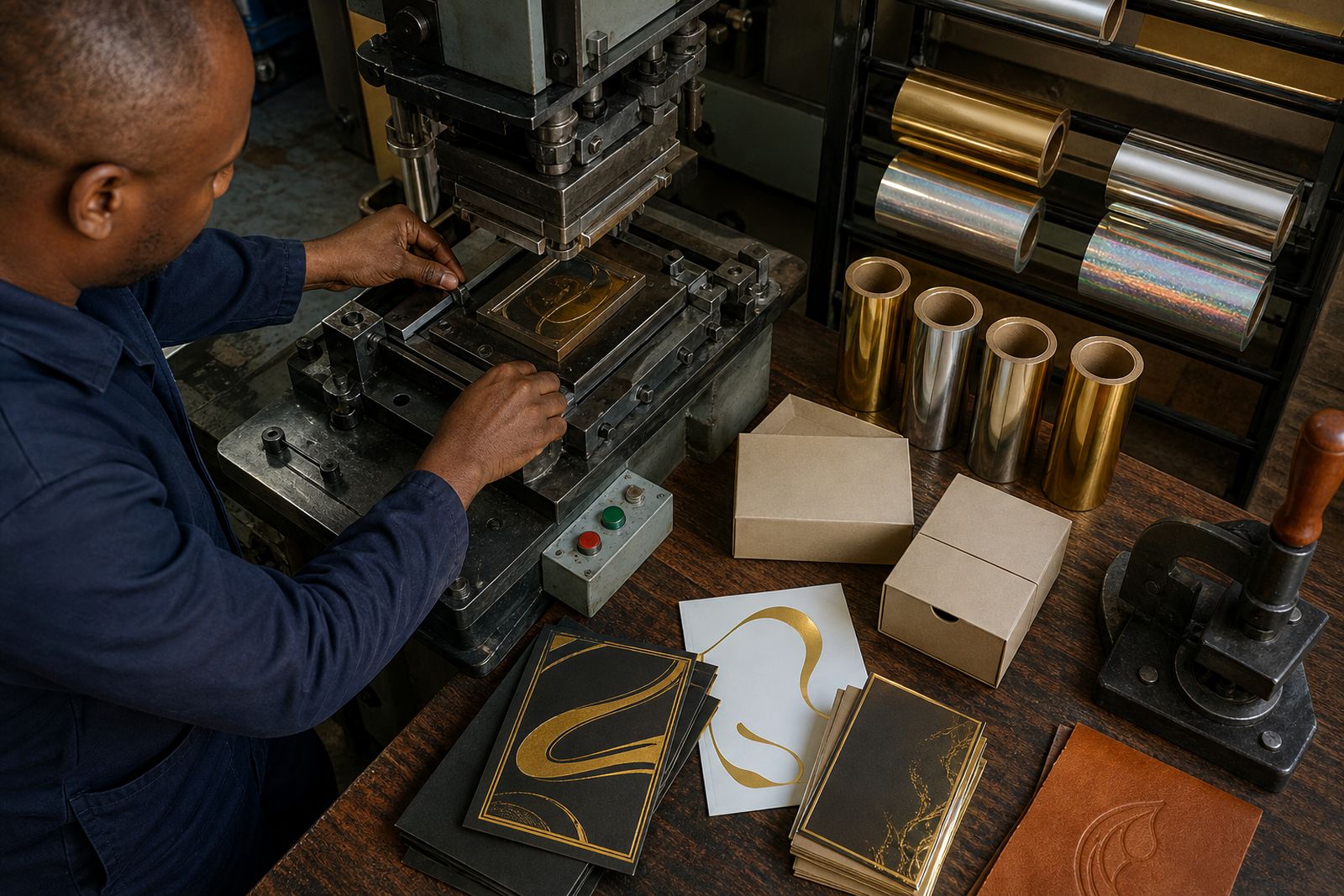
Send a note through our contact form with the substrate, the press you run (platen, cylinder or roll-to-roll), the finish you are after and the run length, and we will come back with a foil grade, a sample and a quote.
Open the contact form