

The year ahead in finishes
Muted metal, clean colour and subtle security details are still shaping foil briefs. The difference is in how they are set up, tested and run.
What to expect
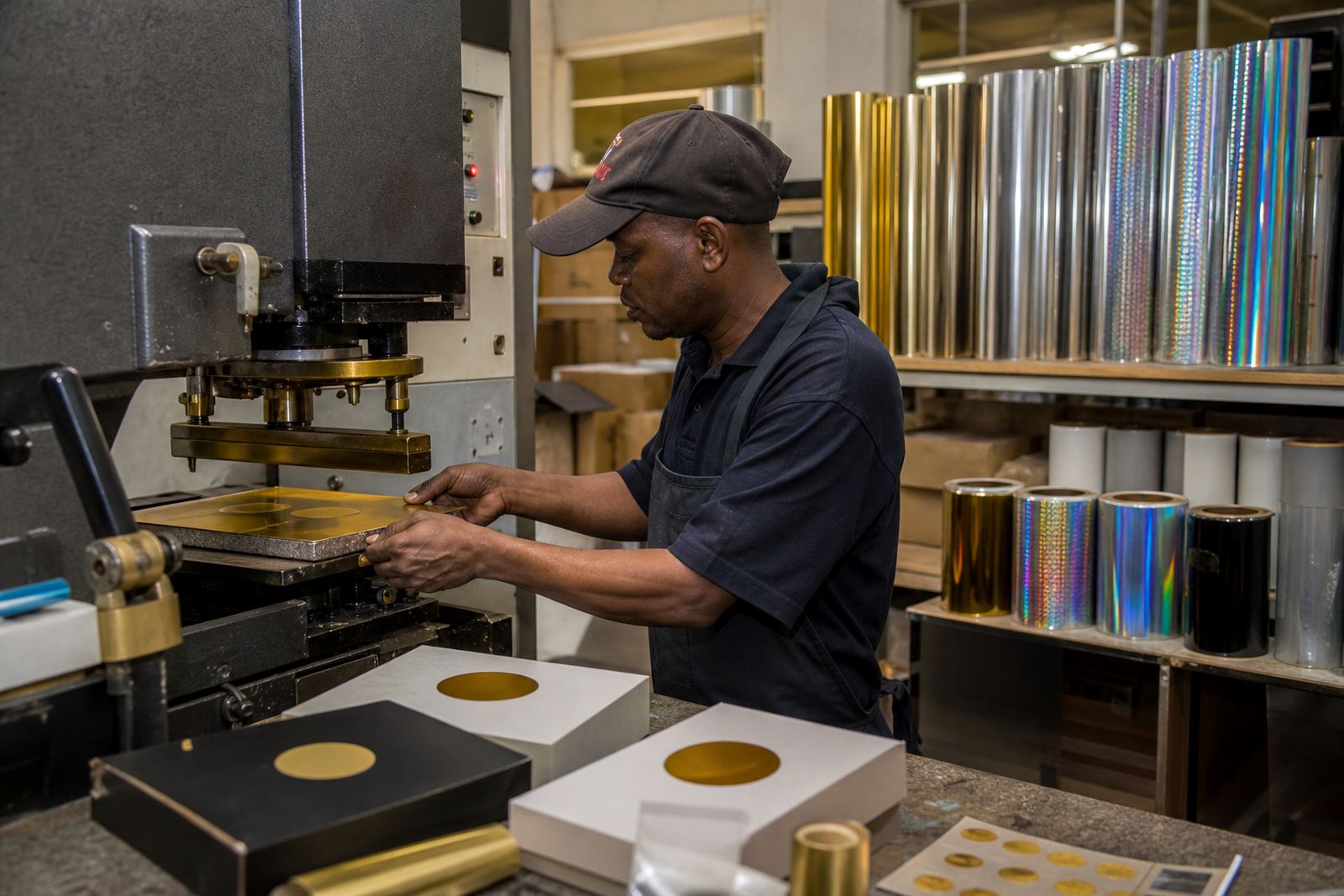
Finishes are moving toward restraint rather than excess. Gold, silver, copper and bronze are still asked for, but often in softer tones, satin effects or mirror accents used sparingly on packs, labels and covers.
At the same time, pigment foils continue to matter where a flat colour read is needed. Black, white and process colours are useful when the brief calls for contrast, brand consistency or a cleaner graphic result than metallic foil can give.
For many jobs, the decision is less about what looks dramatic and more about what holds up on the chosen stock. Coated board, soft-touch laminate and textured surfaces each change how the foil releases and how much pressure the press will need.
Where metallics still work
Metallic foils remain a strong choice for cartons, book covers, labels and presentation pieces. The key is matching the tone and finish to the design intent, whether that means a warm gold, a cooler silver, a copper note or a more reflective mirror look.
For some briefs, a satin finish can be more useful than a high shine. It gives the design a quieter signal and can sit better alongside dense text, line work or detailed artwork.
If a metallic effect needs to hold fine detail, the die, substrate and press setup matter as much as the foil type. For practical guidance on gold options, see Key types of gold stamping foil.
Pigment and colour
Pigment foil is still a straightforward answer when the brief needs a clear colour block rather than a metallic reflection. Black and white remain useful for contrast, and process colours can help when the artwork depends on a tighter colour match.
On labels and narrow-web work, small changes in release and pressure can make a visible difference. Start with controlled trials, then adjust in small steps until the image is clean and even.
For a deeper look at colour selection, read Why pigment foil still matters and Matching Pantone with pigment foil.
Security and special effects
Security foils and holographic or diffraction effects continue to have a place where visibility and authentication cues matter. Used well, they can add a clear visual signal without overwhelming the rest of the design.
The strongest results usually come from careful planning. Artwork, die detail and press settings need to be decided together so the effect reads cleanly and does not break down on press.
If the brief is for a more controlled decorative effect, see Holographic without the gimmick. For setups that need a clear finishing check, the die prep checklist is a useful companion.
Press setup and testing
Most finish problems are solved at make-ready, not after the run starts. Temperature windows, dwell, pressure and release profile all need testing on the actual stock, with the actual die and the actual press.
As a starting point only, some jobs may test in the lower to mid range around 90 to 120 degrees Celsius, but the right setting depends on foil type, substrate and image area. Use short trials and inspect the result before committing to production.
That is especially true on platen, cylinder and roll-to-roll presses, where the mechanics differ. For practical setup notes, see Temperature windows explained, Choosing release profiles and the contact form if you need help choosing a foil or asking for a quote.
| Job factor | What to check |
|---|---|
| Stock | Coating, texture, softness and heat tolerance |
| Die | Magnesium, copper or brass, depending on detail and run length |
| Press | Platen, cylinder or roll-to-roll setup |
| Finish | Metallic, pigment, holographic, security or specialty |
For leather, plastics, textiles and soft-touch laminate, it helps to match the foil to the surface before make-ready begins. See Foil on soft-touch laminate and Leather stamping basics.
What our Hot Stamping Foil customers say
Verified Google reviews
Also worth a look
Ask about a foil for your job
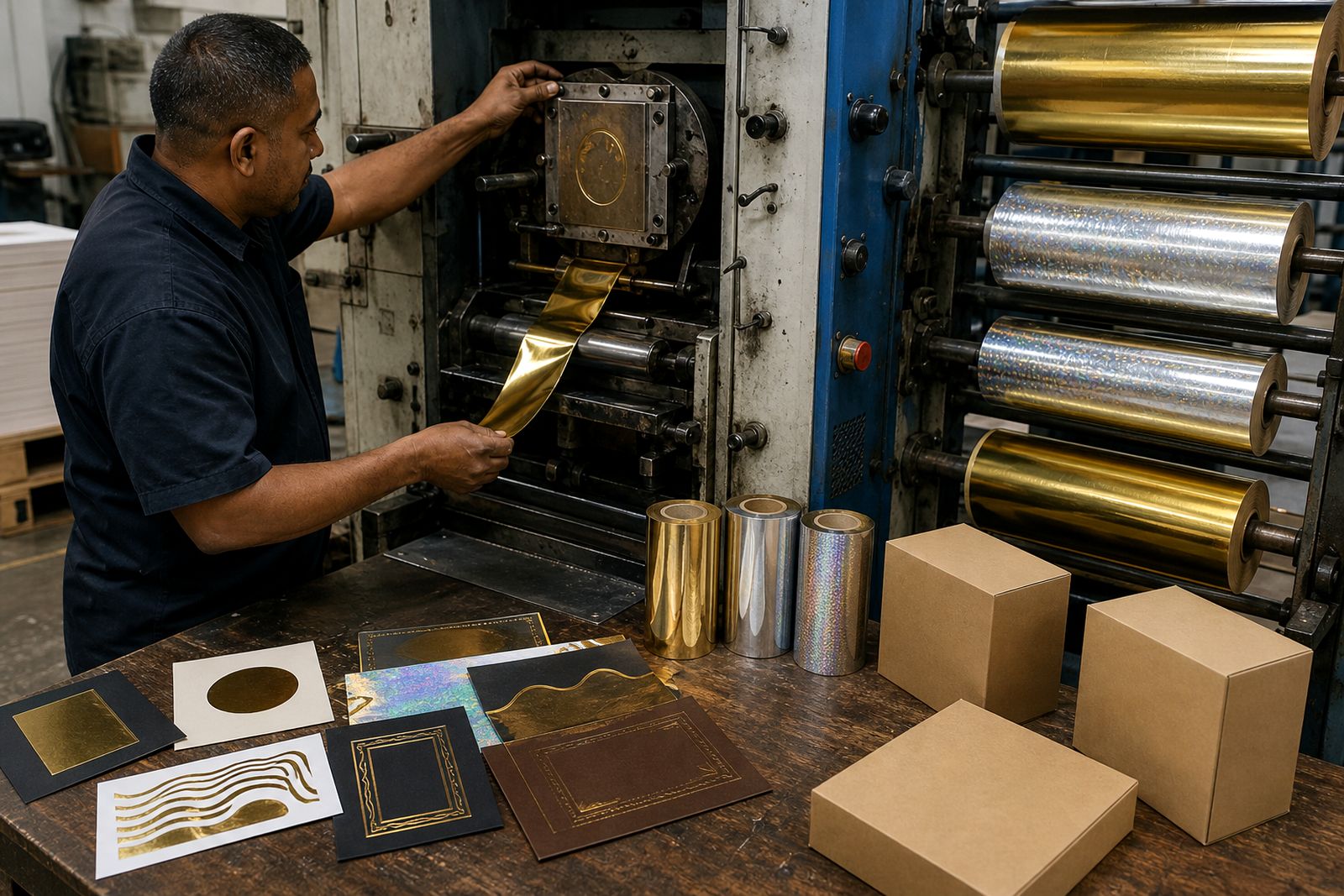
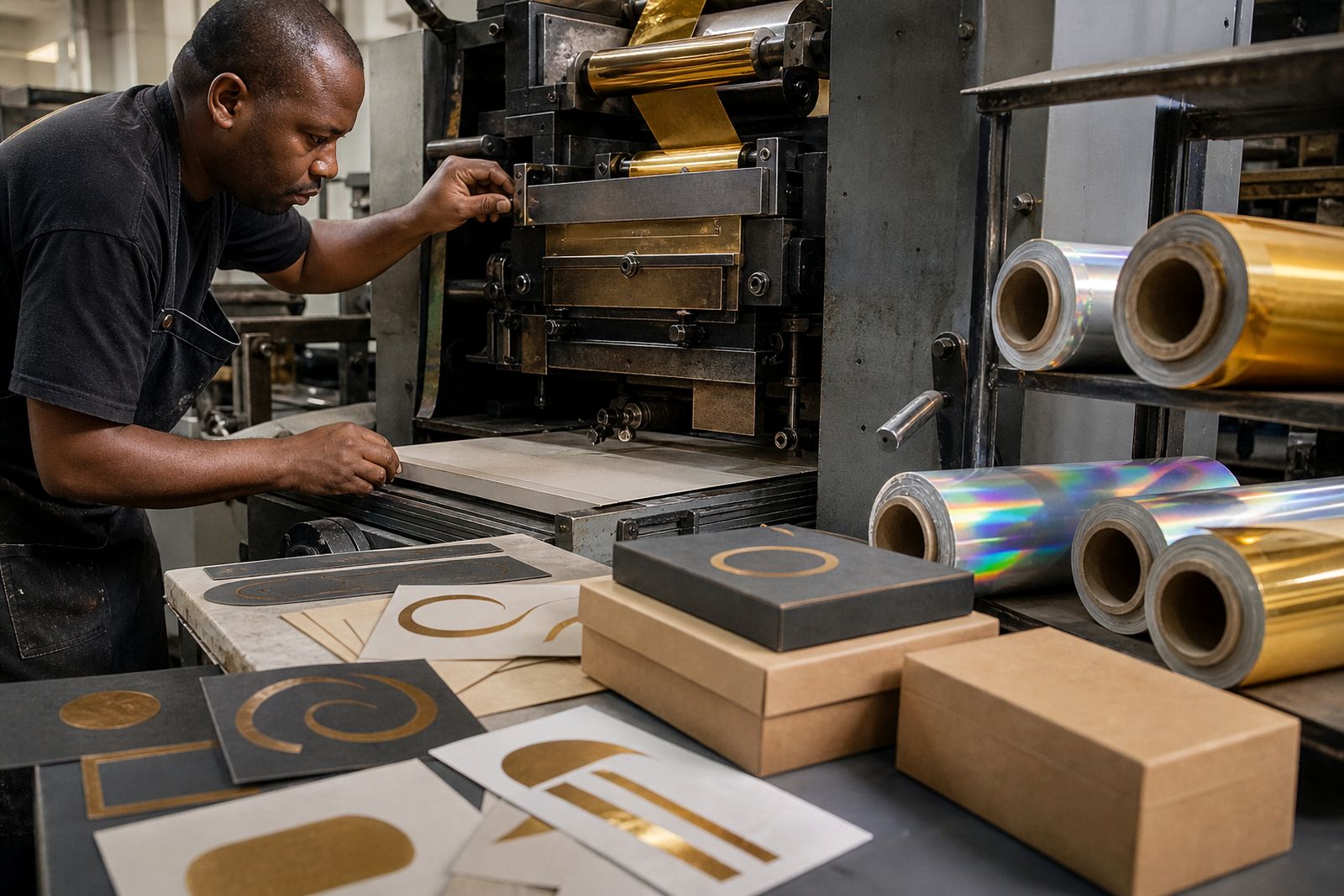
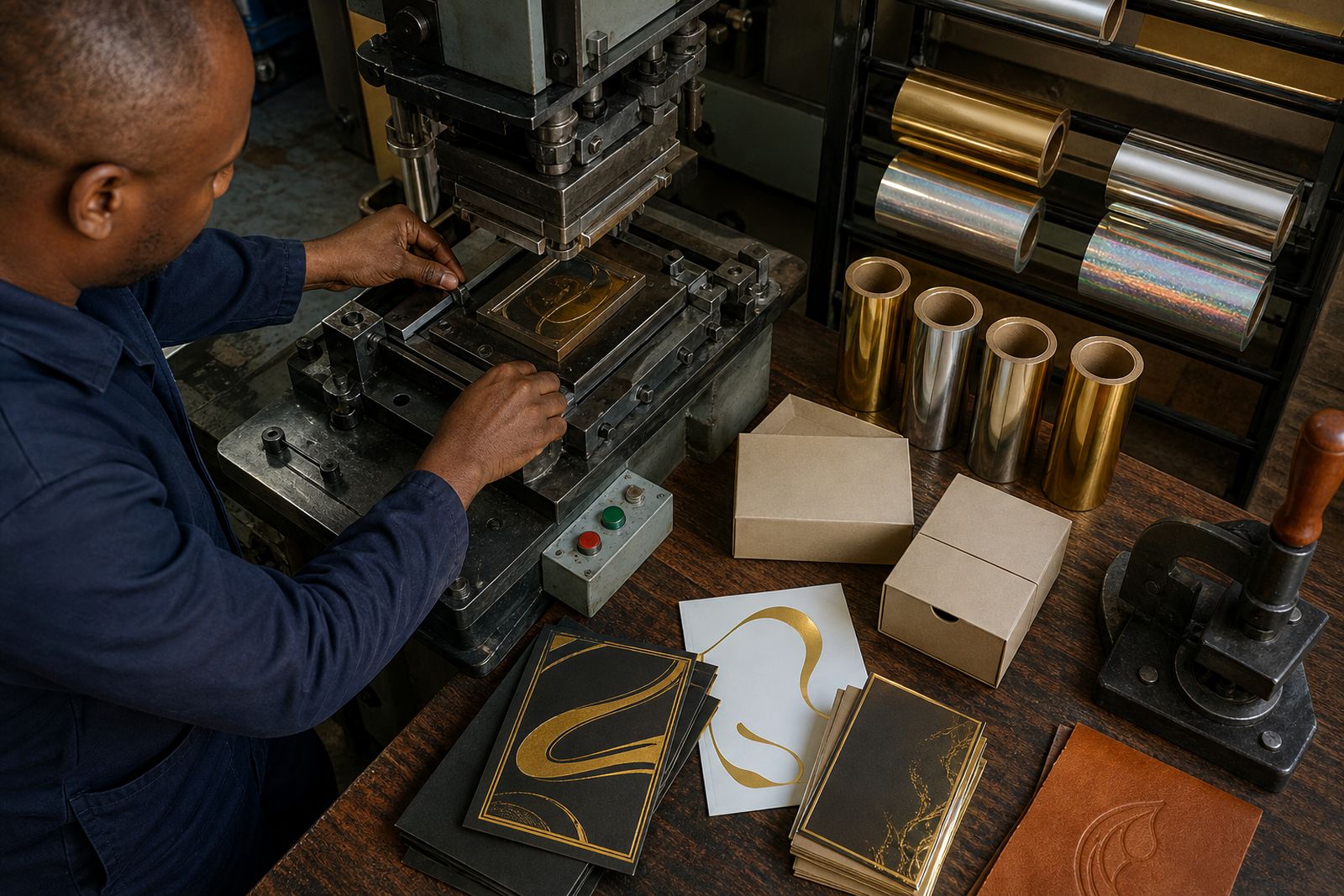
Send a note through our contact form with the substrate, the press you run (platen, cylinder or roll-to-roll), the finish you are after and the run length, and we will come back with a foil grade, a sample and a quote.
Open the contact form